 Skip to content
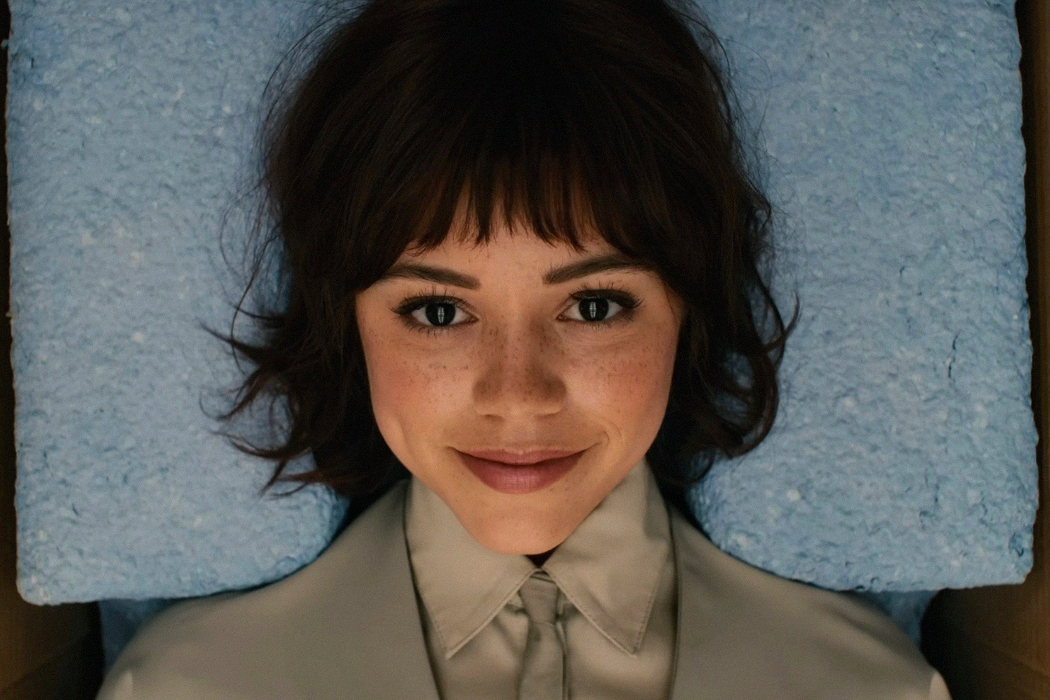
Jenna Ortega appears in exactly two kinds of projects: Braindead commercial Hot Topic crap where her primary audience is 40-year-old perverts, and genuinely compelling indie films. The perverts might pay the bills, but her best performances are in the films that nobody on God’s Earth will ever watch. She’s phenomenal in the straight-to-HBO Max school shooting drama The Fallout and sensational in Miller’s Girl, a film that seems to exist almost purely to criticize the overaged weirdos who gravitate toward the starlet now. To her list of incredible performances you can also add the Kazuo Ishiguro adaptation Klara and the Sun, the new sci-fi drama from Oscar-winning New Zealand writer and director Taika Waititi.
You might have heard of Klara and the Sun thanks to its godawful reputation. After the film got generally bad reviews from critics and terrible word-of-mouth, Sony Pictures Releasing pulled it from 2,000 theaters and canceled some of the film’s international releases. It was a work that was, essentially, dead on arrival, yanked out of multiplexes before most audiences even had a chance to see it and judge it for themselves. Waititi, for his part, had a social media meltdown about how all critics are just failed artists and how he doesn’t even listen to them anyway.
I frankly don’t really understand why Klara and the Sun has become this kind of battleground for critical snobbery. The movie’s good — a good deal better, in fact, than the garbage Jojo Rabbit that Waititi won his Oscar for — and in time, perhaps we’ll come to reappraise it as the Kiwi director’s feel-good, slightly snarky version of Blade Runner 2049 (for better and for worse).
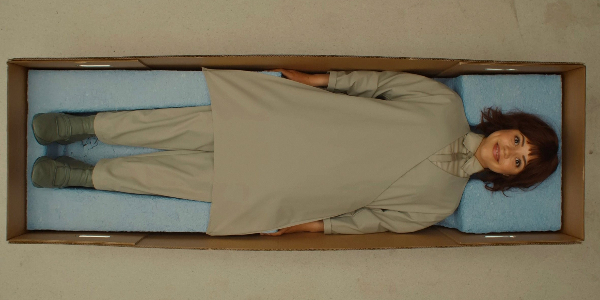
Starring Jenna Ortega as a Replicant
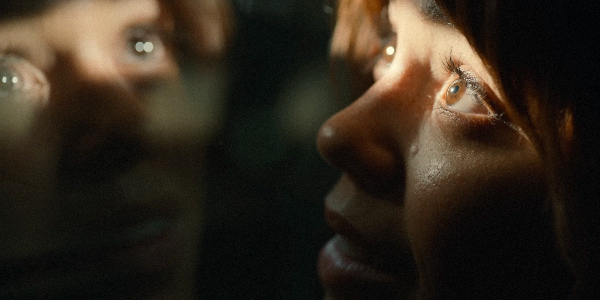
The film takes place in the not-so-distant future, a funhouse dystopia where we can recognize many of the problems of our own world, albeit abstracted just enough to be palatable. Jenna Ortega, who successfully used her cavernous eyes and deadpan humor to break free of the House of Mouse she grew up in, plays Klara, an “artificial friend” whose job is to provide companionship for humans. She hails from an older generation, before all the kinks got worked out. From her prison in a tiny storefront in a polluted urban center, Klara gazes out at the world, worshipping the sun as it rises and sets and praying for someone to come along and choose her.
It’s the Toy Story philosophical dilemma for our age of rapidly developing artificial intelligence — if the fate of a toy is to be chosen by a child, then what does the child owe to its toy? Is it fair for the toy to live in a world where rejection from the child is tantamount to death? Furthermore, if the toy is sentient but has a limited understanding of the world, as Klara does, is it better to educate it or let it persist in its cage of blissful ignorance?
In this opening salvo, Waititi introduces us to his film’s unique balancing act, its juxtaposition of the terrible, filthy dystopian future and Klara’s preprogrammed optimism. Despite the smog blocking out the sun, Klara always tries to see the best in people, including the Store Manager, played distractingly by Russian Doll star Natasha Lyonne, who by the way also runs an AI film studio, Asteria. Her casting and bizarre performance — giving exactly the kind of performance you expect from Lyonne, not adjusted in any way for the hellscape setting — is one of the film’s first potential missteps, an early sign that Waititi’s world doesn’t quite gel together in the tradition of our best mad directors of dystopia, like Terry Gilliam, Bong Joon Ho, and George Miller.
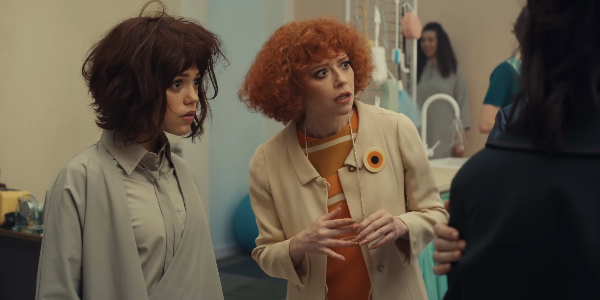
Eventually, someone purchases Klara, even though she has obvious design bugs like an aggressively friendly personality and standing on one leg when she gets nervous. Chrissie (Amy Adams) buys her for her daughter, Josie (Mia Tharia), a companion for the long days Josie otherwise spends alone while her mom works. In a future without the internet (a consequence, we’re told, of World War III), an artificial friend is the perfect solution, Chrissie thinks, for her daughter’s broken heart and barely existent social life.
But Josie is not an ordinary child — not only is she still mourning the loss of her sister, who died when she was very young, but she is also “lifted.” Lifted children have undergone an experimental and very dangerous procedure where their genes are rewritten when they’re infants to produce child prodigies. As such, Josie not only has enormous difficulty meeting and befriending people her own age, but she’s also predetermined to join an elite school of posh prodigies when she comes of age.
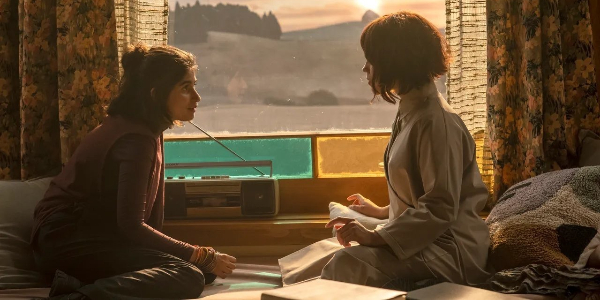
Klara’s mission, therefore, is to give Josie the childhood she never had and could never have otherwise. “Spontaneous and forbidden acts of rebellion,” Josie instructs her. Klara spends her days entertaining Josie or playing co-conspirator in her various schemes, while also attempting to endear herself to characters like the scarecrow android (Jessie Griffin) who stands out in the wheat field; Josie’s best friend, the farmboy Rick (Aran Murphy); and Melania, the family’s housekeeper (played by Waititi’s bestie Rachel House).
Class, Slavery, and Robots
In seeing how Klara affects the other characters in the story and how she impacts Chrissie’s own social standing, Klara and the Sun explores artificial intelligence through the dimension of class. Though in our world today, artificial intelligence is cheaply come by and widely available, in the world of Klara and the Sun, artificial intelligence usage is limited to the artificial friends, consumer devices that we see advertised on hip billboards as though they’re iPhones. Chrissie views Klara as beneath her, since Klara’s from an obsolete line of artificial friends, a line rife with issues and overall considered not as dependable as their modern counterparts.

Chrissie’s purchase of Klara immediately changes her reputation among her peers, in ways that do not become immediately obvious. Our only glimpse of the family’s wider world comes in a climactic scene set in Chrissie’s home, when Josie must entertain the families of other lifted children and put on a good show in order to get into her desired school. All the other lifted children have artificial friends of their own, top-of-the-line models that can even land upright if you throw them across a room.
This sequence, of a legion of snobby upper-class children throwing their artificial companions around like chew toys, threatens to make literal one of the most major subtextual arguments of the story: that humanity, in its imbalanced state of hyperintelligence matched with hyperloneliness, has essentially reinvented slavery, this time packaged as a consumer good and a status symbol. (In fact, wasn’t slavery always advertised as a consumer good and a status symbol?)
Kazuo Ishiguro’s slaves might not be able to comprehend the philosophical demands and ramifications of their servitude, but they are nevertheless doomed to serve their masters until they’re destroyed, forgotten, or rendered obsolete, at which point they’re returned to the factory and melted down for parts to make new servants. Klara is a tragic character, since we know she is destined to outlive her master, and since we know that she is fated to love her master because it is her programming to love her master rather than some genuine emotion within her.
Klara and the Sun is essentially a story about technological slavery, told from the perspective of one of those slaves as they’re purchased by a wealthy household. But while this was a major point of analysis for readers of Ishiguro’s original novel, I’ve seen precious few film critics engage with the movie in the same way. Perhaps it’s down to Waititi’s limits as a storyteller — despite Ortega narrating passages from the novel in voiceover, Klara and the Sun feels like it never leaves the caustic bubble of class into which Chrissie brings Klara. The story, despite leaving the farm, never feels as though it leaves the farm.
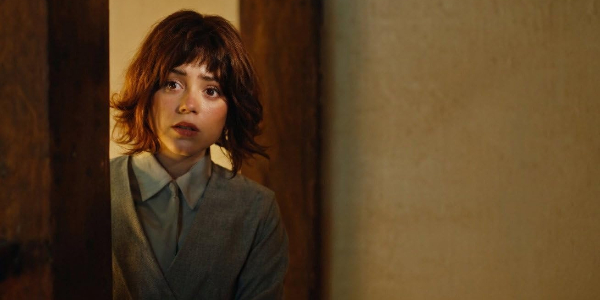
Technology Cannot Fill the Gap in Your Soul
In his adaptation, Waititi preserves the story’s themes of exploitation, commodification, memory, and legacy, and how human loneliness complicates these things in unexpected and sometimes gruesome ways. Critics of Klara and the Sun have complained that the film waters down Ishiguro’s messaging into a twee comedy, but this much is clear: In our desperation and our loneliness, we turn to technology to fill the gaps in our souls. But that technology does not fill the gap so much as it distracts us from the existence of the gap in the first place.
Klara cannot solve Josie’s problems because she is programmed to be a friend and nothing more. Klara is not allowed to be anything more. Klara cannot comprehend anything more. (It’s not a coincidence that Ishiguro’s most famous novel, The Remains of the Day, focuses on a butler reflecting on his decades of service under a wealthy aristocratic British family.)
Klara is a twee character, yes. She is naïve. She is silly. She’s the product of a world where unchecked pollution has rendered cities nigh uninhabitable, where children do not ordinarily speak to one another, and where wealthy families turn to highly dangerous genetic engineering in order to feel like their children have a chance at living successful lives. Klara is absurd because she is the product of an absurd society that must invent something as ridiculous as an artificial android companion so that they can sleep at night. Klara’s odd behavior and intense emotions serve a function to the people of her broken world. It speaks to the reluctant cynicism underlying Waititi’s work that the new generation of artificial friends seem far more emotionally pliant. In Waititi’s depiction of them, they have all their emotional cognition rearranged so that they demonstrate undying loyalty to their human masters, even if they’re thrown or beaten. In fact, they’re built with the expectation that this will be one of their core functions.
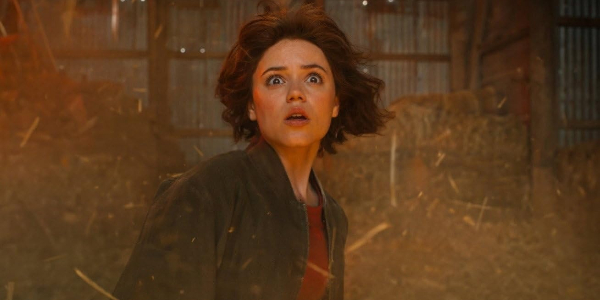
Klara is as perfect a Taika Waititi character as possible. She embodies so many of the themes Waititi has spent his entire career chasing and struggling to understand and dramatize on the screen: naïvete, coming of age, and the terror of realizing that the world you imagined is not the world as it truly is. In Klara’s view, destroying the neighbor’s wheat harvester will please her sun god enough to make Josie well again. Is this all that different from young Jojo, thinking that hiding a Jewish girl in his attic will somehow save his soul from the Nazi regime? Or Boy, who idolizes and mythologizes a father he’s never met? Or even the vampires of What We Do in the Shadows, who have immense difficulty adapting to the social reality of 2010s Wellington?
The filmmaker has long been interested in that time in every child’s life when the lies and misconceptions that once shaped their world fall away like rocket boosters detaching during launch. It’s a credit to the writing and the performance that Klara, a figure both born innocent and hyperintelligent, never comes across as a Manic Pixie Dream Robot, merely an android with a certain view of the world who can never grow up.
Taika Waititi Is Maybe Right to Lash Out at the Critics
To Waititi’s detractors, Klara and the Sun likely feels like the filmmaker stretching too far outside his niche. The New Zealand actor and director was once the hottest filmmaker in the world, riding a surge of popularity and acclaim from the cult vampire mockumentary hit What We Do in the Shadows to become the voice of an entire island nation in the giant capitalist engine of Hollywood. He helped revitalize not one but two massive franchises — having made Thor: Ragnarok and played a huge role in season one of The Mandalorian.
Every filmmaker must wrestle with their impulses as an artist and their ambitions as a businessman. Waititi, whose best films have been made under the pressure of microscopic budgets and small shooting schedules, will likely never work under those conditions again. He’s chased the more successful projects, helming not one but two MCU films, and it’s helped him to launch an incredible career as a producer.
But nothing about Klara and the Sun feels outside the director’s wheelhouse. Waititi has directed sci-fi before, adapted critically successful books before, and made quirky coming-of-age stories before. He’s just never done all three simultaneously.
Maybe Waititi is right to lash out at the critics in this instance. As far as ticket sales are concerned, the backlash to Klara and the Sun almost definitely comes predominantly from people who have not actually seen the film and are thus merely complaining about the concept of the film and the vibe. But why have we seen this adverse reaction to a filmmaker attempting to make a new kind of film, in a way we’re unfamiliar with? What’s the problem with taking risks? Is Taika Waititi supposed to make Hunt for the Wilderpeople and Thor movies for the rest of his life? Are artists not allowed to grow and change?
The answer to all of those questions is, obviously, that Waititi’s fans and critics have pigeonholed him into being one type of filmmaker who delivers one type of movie. And in attempting to buck those expectations, Waititi has produced a film which has the ignominy of being, alongside The Book of Henry, Fant4stic, and Star Wars: The Last Jedi, only the fourth film in history whose reception was so disastrous that its director was banned from making Star Wars movies.
If we insisted that directors can only stay within their niches, then Steven Spielberg would always be known as a thriller and sci-fi director. Christopher Nolan would be stuck making superhero movies for his whole life. Martin Scorsese would be making gangster pictures for all eternity. White men in Hollywood are allowed to change and grow in ways that directors of color simply aren’t. The pushback to Waititi proves that. And perhaps, you’re saying, Waititi isn’t as great a director as those other names I’ve mentioned — but in response, I’d say, how will we ever know his true talents if we don’t allow him to evolve?
Failure is an essential part of the creative process, and while untold numbers of white directors have taken risks, fallen on their faces, and then rebounded with hits, I’m worried that modern society, so eager to turn on its once-beloved icons, does not want to afford Waititi a rebound film. He’ll get one, of course, but Spielberg rebounded from the failure of 1941 with Raiders of the Lost Ark. Zack Snyder, the king of failing upward, rebounded from the failure of Sucker Punch by being given the reins to the DCEU with Man of Steel. Christopher Nolan rebounded from Tenet, his most divisive film to date and a COVID release that lost hundreds of millions of dollars, with Oppenheimer. We’ve never had a Pacific Islander auteur in Hollywood unless you count Lee Tamahori, and he was basically treated as a director for hire for 10 years before leaving to make more complex and ambitious international fare.
All of this debate and controversy had already begun when I went to go see Klara and the Sun. And partway through the film, I wondered: Just what do we want from a Taika Waititi film? What makes his movies so special, so different from anyone else’s? It’s perhaps odd to look for evidence of an auteur in a film that is clearly attempting to pay tribute to Tim Burton’s portraits of the heightened, surreal mundane. It has a spooky lead character, a killer choral Michael Giacchino soundtrack, and insane cinematography and editing, which has all the manic calamity of the Mike Myers Cat in the Hat film. Waititi’s film, though, has all the traits you’d expect from one of the New Zealand director’s films, but it doesn’t lean on any of them strongly enough to compromise that kooky Burton-esque identity.
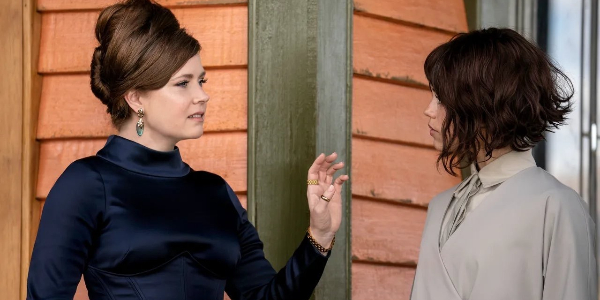
What makes Waititi’s films unique, whether or not they’re aping the work of another filmmaker, isn’t their quirky dialogue, dark Kiwi humor, or even their sentimentality — it’s his characters. Waititi excels at writing characters with complex hidden secrets. From Jojo’s mom (Scarlett Johansson) and the Nazi captain (Sam Rockwell) from Jojo Rabbit to Alamein (Waititi) from Boy and Uncle Hector (Sam Neill, RIP) from Hunt for the Wilderpeople, his adult characters always feel like they have some unknowable past hidden from the main character, and by extension, from us. They’re mysterious in a real, complicated way, and Amy Adams’ Chrissie, though the actress herself is disappointingly underutilized in the film, is no different.
While the film on the whole revolves around Klara and Josie’s relationship, and much of the drama hinges on Ortega and Tharia’s excellent performances, Chrissie is secretly the real heart and soul of the story. She’s the only one of the principal characters who knows all of the story’s secrets before we do — that Josie’s dying, that she’s trying to have her own daughter uploaded into an artificial replica, and that Klara’s role will soon shift from purely perfunctory play pal to the sole living repository of all of her daughter’s memories and personality. Chrissie alone carries the burden of reality from the first moment we meet her to the end of the film. The tragedy of the story belongs to Chrissie — Josie might be the one dying, but we all know that the real tragedy in life is being the one left behind. From Chrissie’s perspective, the story instead becomes a heartbreaking tale about what it means to die in a world where technology means you can live on forever in the body of a computer.
Conclusion
Is Klara and the Sun some kind of misunderstood masterpiece? No. But it is misunderstood. I wish the film’s idea of friendship didn’t look so much like one of those montages you see in an iPhone commercial. I wish the story about the genetically modified prodigies felt less like a bad trip and more like a believable extension of the world. I wish the film could have left the bubble of wealth and class to show us more of Ishiguro’s dystopian world. And yes, there are times I wish the script could have said less instead of more. “You’re not the droid we’re looking for, honey” has to be one of the most awkward lines — and deliveries — of both Waititi’s and Adams’ careers, one that only stings more after its filmmaker has been unceremoniously booted out of the Star Wars galaxy.
But humor and sentimentality often come with a side order of dreck, and thankfully Taika Waititi’s dreck is still more poignant than most directors at their most earnest. Klara and the Sun might not be the best film of the year — hell, it’s probably not even the best Kazuo Ishiguro adaptation of the year — but for Jenna Ortega, it bottles up one of the best, most committed performances of her still-young career. She carries this whole enterprise on her back, and whatever tone issues or story problems Waititi’s film bears, it’s Ortega who must suffer through it and try her damnedest to keep smiling and spin the material into something approaching thematic heft. Klara and the Sun is a flawed endeavor, but it also represents a filmmaker earnestly attempting to branch out and expand his range. For a director who still has a long life ahead of him, it’s not a bad thing that Taika Waititi now has something to prove.
Klara and the Sun is now (maybe) playing in theaters.
Does content like this matter to you?
Become a Member and support film journalism. Unlock access to all of Film Inquiry`s great articles. Join a community of like-minded readers who are passionate about cinema – get access to our private members Network, give back to independent filmmakers, and more.
Join now!


