 Skip to content
The 57th International Film Festival of India arrives in Goa with a theme that doubles as a credo: Stories Without Borders. Held from November 20 to 28, this year’s edition, led by festival director Ashutosh Gowariker, gathers more than 230 films, including a wide international selection from 86 countries. It opens with Paweł Pawlikowski’s Fatherland, places Alina Șerban’s I Matter at mid-fest, and closes with Anthony Chen’s We Are All Strangers.
IFFI 2026 leans into scale, but also into particular conversations between industries. Spain is the Country of Honour; Russia is the Partner Country; the official programme also sets aside a Country of Focus package for France. Around those showcases sit an International Competition, debut and emerging-filmmaker slates, Cinema of the World, From Festivals Worldwide, a new animation section, Docu-Montage, restored classics, and a centenary tribute to Andrzej Wajda.
Across nine days, the festival promises a dense run of premieres, masterclasses, and the WAVES Film Bazaar. In this list, we highlight 15 must-see films from the lineup—works that concentrate the spirit of this edition and the pulse of world cinema in 2026.
1. A Place to Heal
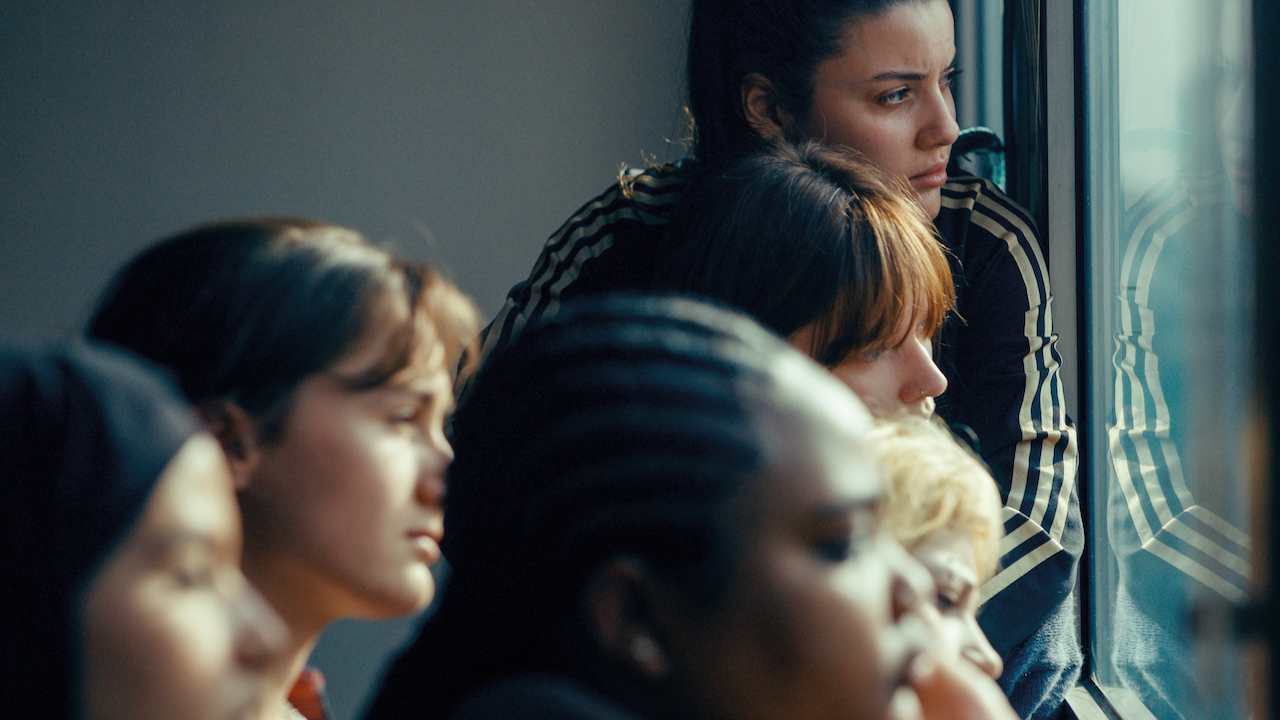
Cédric Kahn’s A Place to Heal (15/18) plays in IFFI’s Country of Focus: France package, a strand on the official programme alongside Spain’s Country of Honour showcase. The French drama, which premiered at Venice 2026 and won the Marcello Mastroianni Award for Best Young Actor, is set almost entirely inside an adolescent psychiatric ward. Police bring 17-year-old Lucia back to a hospital she already knows too well; fragile bonds form among patients and caregivers, until a new arrival, Enzo, unsettles the balance.
Kahn, the director of The Goldman Case and The Prayer, treats the ward as a shared pressure chamber rather than a single-hero journey. In our ‘Cinemania’ review, Julian Malandruccolo praised the film’s refusal of sugar-coated therapy drama and its polyphonic attention to the young people in its care, with Malou Khebizi’s Lucia at the unstable centre.
Below is an excerpt from our review:
As tends to be the case for the more effective and less mawkish views of medical institutionalization, “A Place to Heal” doesn’t so much follow a single protagonist as it takes a polyphonic methodology to explore the varied difficulties these teens experience in their scattered road to selfhood. The closest the film comes to a primary subject—as seems to be widely agreed upon, by virtue of the Venice Biennale jury awarding her their annual Marcello Mastroianni Award for emerging talents—is Malou Khebizi as Lucia, a persistent escapee whose sexual forwardness and leaderly disposition betray a fragile insecurity and outright lament for lacking motherly affection just below the surface.
2. Bitter Christmas

Pedro Almodóvar’s Bitter Christmas (Amarga Navidad) headlines IFFI’s Country of Honour: Spain showcase and marks the India premiere of the Spanish auteur’s latest film after Cannes Competition, Toronto, and San Sebastián. Two-time Oscar winner Almodóvar returns to Spanish-language autofiction: cult filmmaker Raúl (Leonardo Sbaraglia), short of ideas, turns a collaborator’s death into material for a script, and invents Elsa (Bárbara Lennie), a filmmaker whose story begins to mirror his own, until fiction and life bleed into each other.
The official programme frames the film as a question about how much of someone’s life an artist can expose in the name of honesty. In our ‘Cannes’ review, Julian Malandruccolo called it a minor Almodóvar that is finally lifted by a reflexive last stretch, in which the film’s own spark arrives when its characters confront what is missing from the stories they tell.
Below is an excerpt from our review:
For the most part, “Bitter Christmas” registers as a functional-if-unremarkable addition to the director’s canon, laying on his usual penchant for lively colour, dripping sexual energy and measured characterization in service of a recuperation narrative that ostensibly succeeds by mere virtue of not utterly flailing, à la Almodóvar’s uncharacteristically lifeless “The Room Next Door.” But just as Raúl and Elsa begin to feel as if something in their own stories is missing to add that spark of life, it’s the confrontation of that reality that then gives “Bitter Christmas” its own needed spark.
3. Coward

Lukas Dhont’s Coward, in Cinema of the World, is the Belgian director’s most historically scaled work yet, a First World War drama that competed at Cannes 2026 and won Best Actor for its two leads, Emmanuel Macchia and Valentin Campagne. The prize was shared, which feels right for a film built on the bond between them. After Girl (Caméra d’Or) and Close, Dhont and co-writer Angelo Tijssens follow Pierre, a young soldier who arrives at the front determined to prove his courage.
Behind the lines he meets Francis, who is planning a theatre show to lift the spirits of his fellow soldiers. As the fighting grinds on, both men look for pockets of relief in the horror of the war—a premise that has already travelled from Cannes to Toronto and San Sebastián before this India premiere. It is one of IFFI’s clearest windows onto the 2026 European competition circuit.
4. Dust
Tsai Ming-liang’s Dust (Weichen), in the Docu-Montage section, is the eleventh film in the Slow Walker series that began in 2012, with Lee Kang-sheng once again as the Walker. The Taiwan–Spain work played Venice and San Sebastián in 2026 before this India premiere. Here the Walker moves through San Sebastián, around the Comb of the Wind, past a Basque farmhouse, a silent man, women drinking or smoking, punks in a rock bar, and the city’s young and old.
The official page cites a line from the Diamond Sutra—“Specks of dust are not specks of dust; therefore, they are called specks of dust”—as the Walker keeps walking and crosses paths with Anong. For anyone who has followed Tsai from Vive L’Amour and The River to the later Walker films, this is the essential contemplative appointment of the festival: a pilgrimage at walking pace, on the Atlantic edge of Spain.
5. Everytime
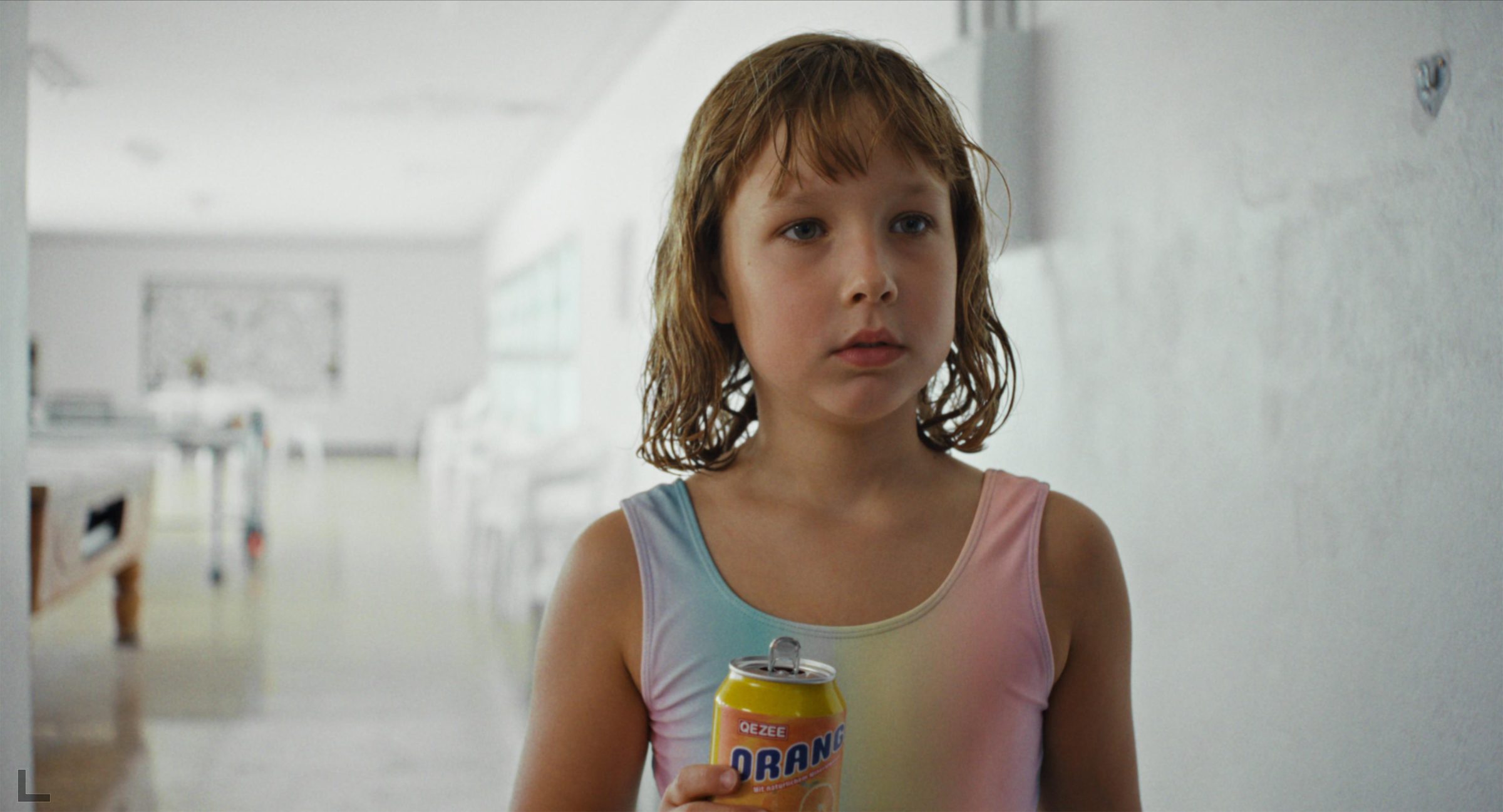
Sandra Wollner’s Everytime, in From Festivals Worldwide, comes to Goa as one of the defining art-house titles of the year: it won the Un Certain Regard Prize at Cannes 2026, then the Heart of Sarajevo for Best Narrative Feature (and a CICAE award) at Sarajevo. The Austria–Germany film follows a mother, a daughter, and a teenage boy bound together by a tragedy, who travel to Tenerife for a family holiday that never happened, letting memory and the present bleed together under the sun.
Wollner, whose The Trouble with Being Born won a Special Jury Award in Berlin’s Encounters section, treats grief as something that will not stay still. There is no dedicated High On Films review of the film, but it landed at no. 6 on our ‘35 Best Movies of 2026 (So Far)’ list, where Julian Malandruccolo wrote about Wollner’s intimate, sun-scorched vision of time and loss.
Below is an excerpt from that list:
It’s only when we look at time in the moment, though—when we stare directly at the sun—that it seems entirely motionless, only for us to find that so much of ourselves has actually vanished in the blink of an eye. “Everytime,” then, digs into the process of grief as a constant ebb and flow against the tide of time itself, but by no means is Wollner’s searingly intimate perspective anything less than tapped into a vein ready to dry itself out in front of the scorching heat of the sun—be it the real thing or the beady pixel at the centre of a “Minecraft” map.
6. Fatherland

Paweł Pawlikowski’s Fatherland (Ojczyzna) is the Opening Film of IFFI 2026, and it could hardly be a more fitting curtain-raiser for a festival built around stories that cross borders. A Poland–Germany–Italy–France co-production, the film follows Nobel Prize-winning writer Thomas Mann (Hanns Zischler) and his daughter Erika (Sandra Hüller) on a 1949 road trip from US-dominated Frankfurt to Soviet-controlled Weimar, a return from American exile into a Germany—and a family—split by the war’s aftermath.
Pawlikowski, the director of Ida and Cold War, won Best Director at Cannes 2026 for the film (shared), which also played San Sebastián and Telluride before its India premiere in Goa. In our ‘Cannes’ review, Julian Malandruccolo welcomed the long-awaited return of Pawlikowski’s monochrome style as a study of homeland, exile, and the verbal force of borders themselves.
Below is an excerpt from our review:
“Fatherland,” then, is precisely the sort of film to steamroll its way through the town square, just as suddenly as the film was announced and completed, to herald the return of a balancing force in Europe’s arthouse sphere. And announce change, Pawlikowski certainly does, precisely by sticking to the very same field of postwar transitional adjustment that made him such a force to remember and miss in the first place.
7. Forever Your Maternal Animal
Valentina Maurel’s Forever Your Maternal Animal (Siempre Soy tu Animal Materno) screens in Emerging Filmmakers, a sharp placement for a director already known to Cannes and Locarno. After I Have Electric Dreams, Maurel returns with a Belgium–France–Mexico co-production that won Best Actress in Un Certain Regard at Cannes 2026. Elsa comes home to Costa Rica after years of study in Europe and finds her younger sister withdrawn, their father adrift in affairs, and their mother absorbed in republishing the erotic poems of her youth.
The official synopsis is a family reunion that becomes a reckoning: three women, and the ties that still bind them, even when no one quite sees the danger in the house. In our ‘Cannes’ review, Debanjan Dhar described a film that refuses to sermonize about womanhood, preferring contradictions, bristling statements, and the thorny insistence of feeling.
Below is an excerpt from our review:
Valentina Maurel’s “Forever Your Maternal Animal” dives into the confusion, vulnerability, heartbreak, and repressed fury of womanhood. There’s an entire gamut that peeks into view, but Maurel isn’t one for hectoring messages. What she does is create contradictions, erect statements that bristle and sentiments that may be thorny but undeniably insistent.
8. From Inside Out: The Architecture of Peter Zumthor
Wim Wenders’s From Inside Out: The Architecture of Peter Zumthor (Die Architektur von Peter Zumthor) also plays in Cinema of the World, a Venice and Busan title that extends the German filmmaker’s long interest in places, looking, and built space. Filmed over 14 years, the documentary uses immersive 3D cinematography to enter the work of Pritzker Prize-winning Swiss architect Peter Zumthor, from private houses to the David Geffen Galleries at LACMA in Los Angeles.
The official synopsis is clear about its aim: not a catalogue of landmarks, but a study of materials, craft, and the way buildings press on memory, emotion, and ordinary life, told through visitors, residents, and craftspeople. In a programme already rich in fiction, Wenders’s film is the one that asks you to look at walls, light, and rooms as if they were themselves a kind of story.
9. Full Phil
Quentin Dupieux’s Full Phil closes this list from the Country of Focus: France package, with an India premiere after Cannes, São Paulo, and the Viennale. The French absurdist—also known as the musician Mr. Oizo—casts Woody Harrelson, Kristen Stewart, and Charlotte Le Bon in a father-daughter farce that quickly leaves naturalism behind. Philip Doom, a vulgar American tycoon who cannot keep up with the modern world, goes to Paris to reconnect with his estranged daughter, Madeleine.
They check into a luxury suite and make an awkward attempt at repair, only for the stay to collapse into the kind of surreal nightmare Dupieux has made his signature. Among IFFI’s more severe prize films, Full Phil is the antic counterweight: a midnights-adjacent comedy about family, money, and how quickly a reconciliation can go off the rails.
Whether you’re exploring the full programme, revisiting past editions, or planning your own festival watchlist, you can dive deeper through the official IFFI website and explore more global conversations through IFFI’s International Cinema section, Cinema of the World listings, and From Festivals Worldwide programme. If this list has helped guide your journey, consider following High on Films on social media.
10. Look Back

Hirokazu Kore-eda’s Look Back, playing in Cinema of the World, is a live-action adaptation of Tatsuki Fujimoto’s manga about two girls from a small town, Fujino and Kyomoto, whose love of drawing binds them across thirteen years as they chase the dream of becoming manga artists. The Japanese film comes to IFFI after Venice, Toronto, and Busan, and the official IFFI page lists a cluster of Venice collateral honours, including the Cinema & Arts, SIGNIS, CinemaSarà, and UNIMED awards, plus a Fanheart3 special mention.
It is a different work from Kiyotaka Oshiyama’s 2024 anime of the same source, and Kore-eda—whose recent festival run also included Sheep in the Box at Cannes—treats the friendship as a long, delicate education in art and grief. In our ‘TIFF’ review, Julian Malandruccolo placed the film carefully against the anxiety of live-action remakes and argued that Kore-eda is adapting the manga on his own terms, not simply remounting the anime.
Below is an excerpt from our review:
Of course, “Look Back” is far different from one of Disney’s live-action butchering of a timeless classic—or Kore-eda’s limp AI musing—for several reasons. For one, the Japanese view animation far differently than the whimsy-free West, so there was never any “kiddie” connotation attached to this material to be warily scrubbed away. For another, Kore-eda isn’t even technically remaking an anime film at all, but rather separately adapting from the same Tatsuki Fujimoto manga that Oshiyama had previously sought as inspiration.
11. Queen at Sea

Lance Hammer’s Queen at Sea, screening in Cinema of the World, is the rare dementia drama that refuses the comfort of tidy moral answers. The UK–USA feature, Hammer’s first since Ballast, arrives in Goa after winning the Silver Bear Jury Prize and a Silver Bear for Best Supporting Performance at the 2026 Berlinale. Juliette Binoche, Tom Courtenay, and Anna Calder-Marshall play a daughter, a stepfather, and a wife whose advanced dementia leaves the family arguing over consent, care, and who should decide what happens next.
The official synopsis is deceptively calm; the film’s force lies in how long it is willing to sit with that argument, and with the unintended consequences of trying to protect someone who can no longer fully speak for herself. In our review, Debanjan Dhar singled out the three central performances and Binoche’s unguarded work as a woman who cannot settle on what would really help her mother.
Below is an excerpt from our review:
“Queen At Sea” is firmly propelled by three outstanding, wrenching performances. This might be Binoche’s most immediate, piercing performance in years. She’s extraordinary as a woman cast in a quandary. Amanda can’t really make up her mind about what would really help her mother.
12. Salvation
Emin Alper’s Salvation (Kurtuluş) is one of the few Asia premieres on this list, and it gives From Festivals Worldwide a Berlin prizewinner of real voltage. The Turkish filmmaker’s latest, a multi-country co-production, won the Silver Bear Grand Jury Prize at the 2026 Berlinale. In a remote mountain village, the return of an exiled family reopens a long dispute over land; old rancour rises to the surface.
The official story turns on Mesut, the village leader’s brother, who begins to have visions he takes as messages from God and starts to question the authority in his own house. Faith and the struggle for power split the community, and the film holds its ending in the balance of its title: tragedy, or salvation. Do not confuse it with another 2026 film of the same name; this is Alper’s Kurtuluş, and it is the one to seek out in Goa.
13. The Dreamed Adventure
Valeska Grisebach’s The Dreamed Adventure (Das Geträumte Abenteuer) also screens in From Festivals Worldwide, arriving with the Jury Prize from Cannes 2026 and further berths at Toronto and Karlovy Vary. The German director of Western and Longing returns to Europe’s borderlands: in Svilengrad, on the Bulgarian frontier, Veska runs into Said, an old acquaintance whose car has been stolen, and takes him to the archaeological site where she works.
What begins as a favour becomes an entanglement. As they reconnect, Veska is drawn into Said’s criminal world and starts to see hidden links between crime and the town itself. When figures from her past reappear, she is forced to face both the place she lives in and her own history—another of Grisebach’s unhurried, uncompromising studies of how people live on the edge of a line, and what happens when that line starts to move.
14. The Samurai and the Prisoner

Kiyoshi Kurosawa’s The Samurai and the Prisoner (Kokurojo) screens in Cinema of the World after Cannes, Fantasia, and Sitges. It’s a new jidai-geki from the director of Cure, Pulse, and Tokyo Sonata. Masahiro Motoki plays Murashige Araki, lord of Arioka Castle, who rebels against Oda Nobunaga and prepares to defend his fortress. Surrounded by enemy forces, he must protect the people inside and keep his own restless samurai in line.
Then a young samurai is murdered, and a run of strange incidents spreads fear and suspicion through the castle. With enemies at the gates and possible traitors within, Murashige turns to Kanbei Kuroda, a brilliant strategist locked in the dungeon, to help him uncover the truth. In our review, Liam Gaughan described the film as a lavish tribute from one Kurosawa to another, praising its blend of introspective stillness and suspense, and Yuriko Yoshitaka’s late, devastating turn as Murashige’s wife.
Below is an excerpt from our review:
As is often the case with chaptered approaches, not every quarter of “The Samurai and the Prisoner” is equivalent. While the third section in particular is the one that drags the most, none of the subsequent mysteries are as exhilarating as the inciting incident. Nonetheless, “The Samurai and the Prisoner” is a remarkable feat of adaptation that homages a classical style of filmmaking that is rarely utilized. The feudal era is a setting more than it is a genre, and Kurosawa uses it as the setting for a deeply harrowing psychological mystery.
15. Woman Unknown
May el-Toukhy’s Woman Unknown (Kvinde Ukendt) is among the most decorated titles in From Festivals Worldwide, and one of the essential tickets of the festival: the Danish drama won the Golden Lion at Venice 2026, then continued on to Toronto and London. El-Toukhy, the director of Queen of Hearts, sets the story after the Second World War, as Marie, a former housekeeper, prepares to marry the wealthy head of the household and plans an elaborate engagement dinner.
The official synopsis is a social ritual under quiet pressure. As the preparations unfold, secrets from Marie’s past begin to surface, threatening to undo the occasion and the future she has tried to arrange. For a festival that likes to place world-cinema prizewinners in conversation with Indian audiences, this India premiere is as close as IFFI 2026 comes to a must-see in the strictest sense.
…
Whether you’re exploring the full program, revisiting past editions, or planning your own festival watchlist, you can dive deeper through the official IFFI website and explore more global conversations through IFFI’s International Cinema section and its Cinema of the World listings. If this list has helped guide your journey, consider following High on Films on social media.


