 Skip to content
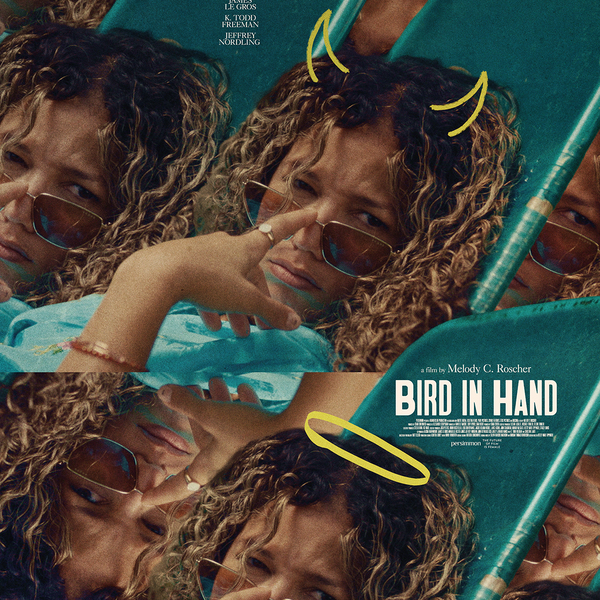

The title character of writer-director Melodia S. In Roscher’s full-length debut, bird in hand Not a bird species, but Bird Rowe (Alisha Wainwright) takes flight, figuratively and literally, when her longtime boyfriend, Frank (John Reynolds), unceremoniously proposes at a Halloween party after an unfortunate, alcohol-fueled incident at a children’s day party.
Inadequate doesn’t begin to describe Bird’s apparently self-destructive behavior, but it’s also par for the course for Bird and Frank’s relationship. Aside from a failed marriage proposal, Bird and Frank are nothing short of a match made in heaven.
No matter how rom-com-style the meet-and-greet brings them together, they’ve long since reached an impasse, unwilling to even acknowledge, let alone discuss, the underlying issues that plague their relationship. Instead, Bird unexpectedly accepts Frank’s proposal. Almost immediately, he leaves their Brooklyn apartment without so much as a goodbye or a note taped to the fridge.
Avoiding conflict only gets you so far, and Bird is driven from Brooklyn to his former home in Virginia, where his long-estranged mother, Carlotta (Christine Lahey), lives with Bird’s stepfather, neighbor partner Dale (Jeffrey Nordling). It’s clear from the start that Byrd has left one troubled relationship for another, but this time Byrd doesn’t have any nice options: she can sleep in her car, rent a room at a local motel, or crash on her mom’s couch. The bird chooses the last alternative.
Byrd and Carlotta’s relationship is the result of long-standing issues, some of which have to do with Carlotta’s quirky, unconventional personality, but mostly due to Byrd’s biracial identity and the absence from her immediate life of Byrd’s father, local musician Bauer (K. Todd Freeman). Knotty, deep-rooted issues, ones that cannot be resolved in a few days. Lacking the self-awareness characteristic of flawed characters, Bird certainly tries to solve them at least.
Rocher adds to the mix a local couple, Dennis (James Le Gros) and Leigh (Annabel Dexter-Jones), city-to-country transplants. Dennis and Leigh, an advertising executive and photographer respectively, want to turn their newly purchased, slightly dilapidated plantation into something else. What this “something else” means, however, is not particularly clear. Dennis and Leigh can’t decide whether they want to completely strip their property of its historical and cultural associations, recognize them in a respectful, rough-and-tumble manner, or turn it into a money-making tourist stop and/or local museum.
Dennis and, to a lesser extent, Lee, play key roles in Bird’s halting, incomplete self-realization: Dennis empathizing with Byrd’s troubles, the dubious, initially uncomfortable Leigh developing late in the film, which sees Bird become part of Leigh’s Grant photography. However, Birdy doesn’t have Bird’s best interests at heart either, something Bird, increasingly unable to sort out his messy life, doesn’t see for himself until it’s too late. One rash, ill-conceived decision leads to another (and another), leaving behind a predictable level of chaos.
Thematically, Rocher’s screenplay treads familiar ground (ie, you can’t go home, and woe betide you if you do), but refreshingly refuses to give Bird an easy way out of the mess of his own making. It’s self-destructing for T. She also has the scars, not to mention the lifelong trauma associated with her biracial identity (the prejudice and racism of others, finding her own way in the world) and the constant sting of a father who rejected her and played no part in her upbringing.
Unsurprisingly for a first-time feature director, Rocher relies heavily on the combination of his well-chosen cast and sharply written dialogue. Bird in hand An otherwise thin narrative. Beyond the cheeky opening scene, shot in hand-held style in slow motion and a later slow zoom straight out of a horror film, Roscher adopts a relatively straightforward, understated visual style that’s all the better to keep the bird and all its opposition front and center.
After a limited theatrical release, Bird in handAvailable now to rent via Fandango, Amazon Prime Video or Apple TV.


