 Skip to content

PÖFF 2026: Festival of Contradictions
The 30th Tallinn Black Nights Film Festival has handed out its prizes. The PÖFF awards were a mixed bag this year. There were some welcome surprises, some perfectly defensible choices, and, unfortunately, some decisions that seemed far less adventurous than the festival itself has long claimed. The festival has established a reputation for films that refuse to conform to the prevailing expectations of contemporary cinema. his Rebels with a cause Competition, in particular, has usually sheltered work that is genuinely idiosyncratic, provocative, or formally unconventional.
This year’s jury selection has sometimes offered a rather different idea of what a rebellion looks like. The ceremony itself replaced last year’s 5½-hour duration with a 4-hour affair. A very welcome surprise was the jazz band that was on stage throughout the show.
Grand Prix and official selection
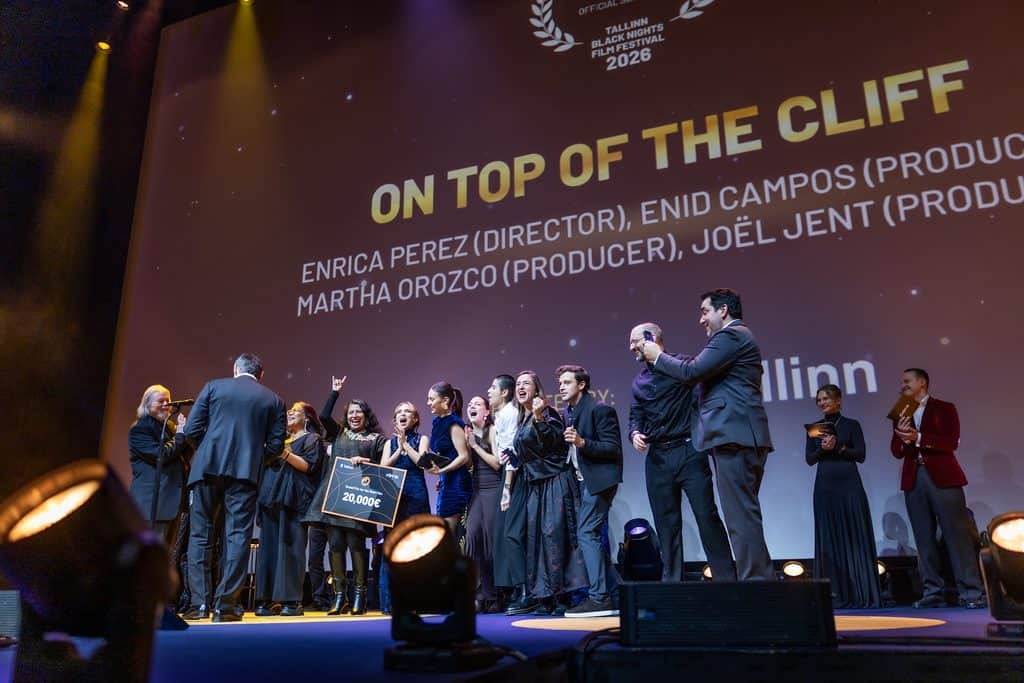
The Grand Prix went to Enrique Perez on top of the rockwhich also earned Bianca Bucelli Best Actress. The jury praised the combination of direction, screenplay, performances, cinematography, design and music and called the result an intense and visually eloquent world. There is nothing intrinsically controversial about awarding a film in which departments work consistently. The prize also recognizes a filmmaker who can create a distinctive cinematic world and not just illustrate a subject.
Fred Bailiff won Best Director A job well done. Mathis de Suter was named Best Actor in a Debut assignment; The jury highlighted the play’s tenderness and emotional sensitivity in a story about post-war masculinity. Official Selection also acknowledged Alison Coon’s screenplay matriarchFor cinematography by Owen McPollin One sweet hourand music and production design a horse. Mastery noticed. Risk taking, less.
Rebels with a Cause: Rebellion by Numbers
He made the most disappointing decision Rebels with a causeWhere Dylan Steven Levers pop pop won the best film. The jury called it urgent, vital and daring, praising its inventive visual language and comedic performances. This vocabulary is now familiar, and it tells us very little about the actual cinematic qualities of the film. pop pop It feels like an ultra-woke movie from five to seven years ago, complete with jargon and ideological shorthand that’s getting increasingly old. The casual use of terms such as “manosphere” is symptomatic of a work that mistakes contemporary cultural categories for meaningful engagement with them. Get ready for the upcoming review.
This is the type of filmmaking that PÖFF usually avoids. The festival’s rebellious spirit generally means a desire to challenge cinematic conventions, not just reaffirm the ideological assumptions of a particular cultural moment. The jury’s statement that this is “exactly the kind of rebellious filmmaking we need more than ever” only reinforces the impression that the award was driven by the film’s perceived relevance. Rebellion seems to have become about having the right opinions about the right things.
At least the category offered a more promising alternative. Special mention to Louise Kalagiani An arrow for a stone heart acknowledged the film, which brings cosmology, society and politics into an interesting relationship. Christopher Yates Best Director Award night vision It was another encouraging choice. The jury praised his experimental approach, mastery of form and unusual tonal confidence. Yates’ film was arguably the best in the section, alongside Clichy Lopez irreparable.
Baltic Competition: Major Absence
Andrew Blazevicius How to divorce in wartime It became the winner of the best Baltic feature film. The decision is defensible. The jury praised his ability to find humor in difficult situations and combine the personal and political without manipulation or concession. The distant cinematography and understated approach were also noted; The film trusts the viewer to form their own judgment.
However, the Baltic competition contained a glaring omission. supporting role Should have been a serious contender for the main prize of the section. His absence from the awards is hard to understand. The film deserved much more attention than it received. He should have easily won the Baltic section. Perhaps, the numerous awards already won by the film (Rotterdam, Sarajevo, for example) made the jury look elsewhere. Nevertheless, Ana Urushadze’s sophomore work deserves all the credit it can get. his debut terrible mother (2017), was also strong, but supporting role is on a completely different level.

Linda Olte won Best Director childAnd Vesna received the Baltic co-production prize. Both decisions may have merit, but the overall result left the distinct impression that one of the competition’s most compelling achievements had been overlooked. A festival award is not necessarily an objective measure of artistic quality. When a film of caliber supporting role However, one is entitled to ask what the jury was looking for.
First Features and Critics’ Choice
The first art competition produced a more diverse set of results. Chabname Zaryabi When he hears the bells Winner of Best Film; The jury praised its scale, energy and history of resistance. Nagib Khaja won the best director award lion heart. exotic and to forget Special awards were given.
recognition to forgetParticularly welcome was the Lithuanian debut, which has been described as an intimate exploration of family, absence and buried secrets. It’s encouraging to see a Baltic film getting attention in a competition that could easily be dominated by more prominent international titles.
Maya Vitkova-Kosevi’s critics’ choice one month He won the best film. The enthusiasm of the jury was unmistakable: radical tenderness, visual and musical style and confidence in an audience willing to like an unconventional heroine. Matias Mayer won the best director award big familyA disturbing and officially guaranteed film about a house that aims to save children from the street, which gradually becomes a labyrinth of control.

Documentaries and remaining awards
Kaspar Astrup Schroeder We are fighting the war He became the winner of the international documentary competition. Pepe Andreu and Rafa Molesi Pieta Received the Baltic Documentary Award. Both choices seem to recognize films with a strong connection between subject and visual approach. A special prize was awarded father’s housewhich explores manipulation and abuse through reenactments. The NETPAC award was presented to Murat Eroglu white as salt; FIPRESCI Prize to Cristian Rojas princess.
The Audience Award went to Lewis Paxton enteredA comedy about two deserted islands and an uninvited guest. The first Free World Award went to Halkawt Mustafa’s It’s not heaven if a woman kills you. The PÖFF also awarded lifetime achievement awards to Priit Pärn, Sven Grünberg and Hilmar Odsson. Jarmo Reha received the Bruno Oia Young Actor Scholarship.
2026 Award Findings
The 30th edition once again demonstrated the considerable breadth of PÖFF, from ambitious international productions to intimate Baltic films and formally adventurous independent works. However, the awards reminded us that the identity of the festival is not automatically reflected in all the decisions of the jury. PÖFF has often distinguished itself by resisting the increasingly predictable language of contemporary film culture and by embracing films that are difficult to categorize, intellectually stimulating and formally daring. A great example is the winner of the 2024 Grand Prix Silent City Driver.
This year, some of the choices were much more casual. A festival that prides itself on cinematic rebellion must be wary of films just because they embody its approved version. The most interesting cinema does not simply repeat the language of the moment. He reads it, complicates it, or finds a way around it. PÖFF has shown for many years that it understands this difference. We can only hope that next year’s jury will remember this.


