 Skip to content
What is the New Stanford Prison Experiment?
The original Stanford Prison Experiment was conducted by Stanford psychology professor Philip Zimbardo in 1971. It involved male students who were divided into two groups, with some acting as guards and others as prisoners. Participants were placed inside a simulated prison in the basement of a university building, where they were expected to follow their assigned roles. Although the experiment was intended to continue for two weeks, it was stopped after only six days because the guards’ behavior had become increasingly extreme.
The study became widely known for its apparent demonstration of how quickly people could adopt abusive behavior when placed in positions of power. However, her methods and conclusions have since come under considerable criticism. As more information came to light about Zimbardo’s involvement and how the experiment was conducted, its credibility as a scientific study weakened. Nevertheless, the experiment continued to hold a place in popular culture, often serving as an example of how power can influence human behavior.
The New Stanford Prison Experiment attempts to revisit the central question behind the original study: Does power corrupt?
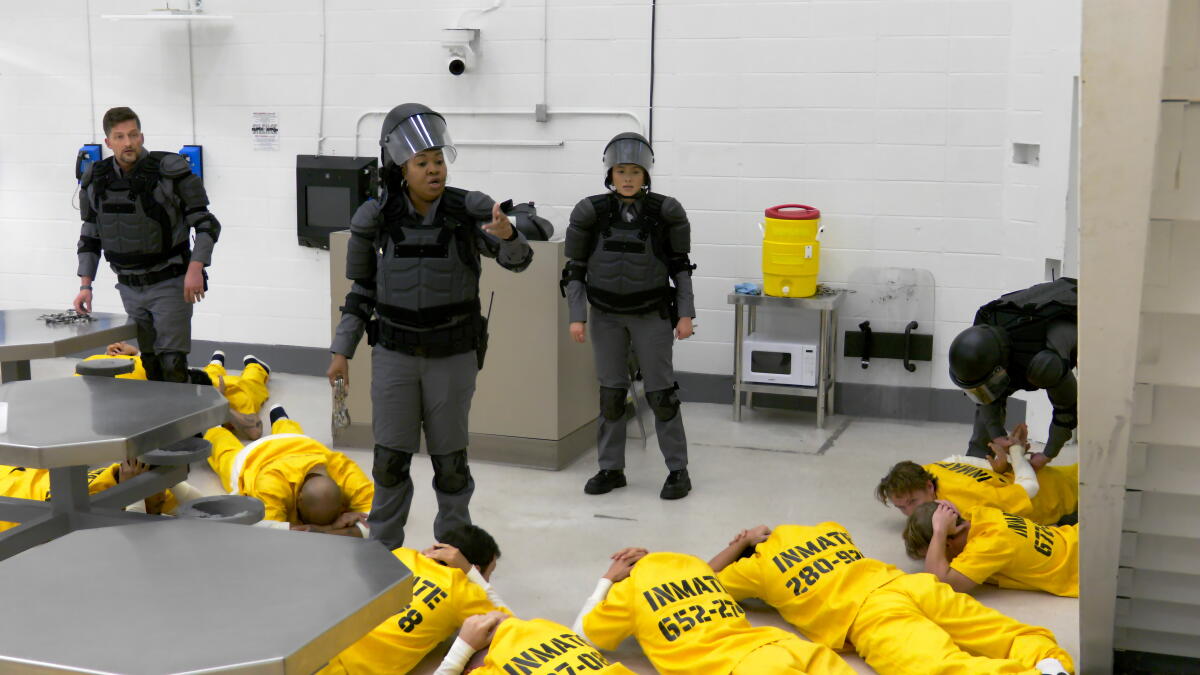
The Netflix series gathers 30 participants from different backgrounds and places them in a real-life housing unit at a correctional facility in Georgia. Unlike the original experiment, which involved college students responding to an advertisement for a psychological study, this version includes people of different ages and experiences. Some participants have experienced difficult childhoods, some have families, and one was previously in prison. They enter the experiment for different reasons, including the desire to challenge themselves, try something new, or prove something to themselves.
However, they do not enter the premises without any expectations. Participants are aware that they are taking part in a television series, and this awareness affects how they approach their roles. Some take the experiment seriously, while others are more interested in challenging its rules or testing how far they can push the situation.
The series also features three experts who observe and comment on the contestants’ behavior. This is Alison Wood Brooks, a behavioral psychologist and professor at Harvard Business School. Michael Cantrell, a federal corrections professional with decades of experience. and journalist Trymaine Lee, whose work has covered topics such as Hurricane Katrina and the black electorate. Their role is to provide context for the events within the installation and help viewers understand the decisions the participants make.
How does the experiment work?
Unlike the original Stanford prison experiment, which was shut down after six days, the Netflix series organizes its experiment into four planned phases: transition, hierarchy, role reversal, and self-governance. Each stage changes the conditions inside the facility and gives participants new challenges to face.
During the transition phase, participants settle into their assigned roles as guards and prisoners. They begin to understand the rules of their environment and how much control the guards have over the prisoners. As the experiment moves into the hierarchy phase, differences in leadership styles become more apparent and participants begin to respond to the authority exercised over them.
Guardians do not all approach their responsibilities in the same way. Chris Lee believes that leadership comes from inspiring people and gaining their cooperation, while Chet Hudson takes a more rigorous approach and compares managing prisoners to breaking horses. Their contrasting methods create different environments for the people under their control, showing how power can be exercised through encouragement or through strict discipline.
Prisoners also respond differently to their circumstances. Some accept the rules and try to make the most of their situation, while others become disillusioned with the hierarchy and start looking for ways to challenge it. Pete Zaremba, a fifth-grade social studies teacher who becomes one of the show’s central participants, openly expresses his desire to stop following the rules and start trying the experiment himself.
His attitude points to one of the central questions of the series. If the participants understand that the entire situation is fabricated, how much power do the roles assigned to them actually have? Guardians can be given power, but the experiment only works if everyone agrees to participate in it.
The role reversal phase introduces a major change by changing the positions of the male guards and the more rebellious prisoners. The change allows ex-guards to experience the restrictions they previously imposed on others, while ex-prisoners have the opportunity to exercise power.
This change becomes one of the most revealing parts of the series. Hudson, who previously advocated a strict hierarchy, begins to talk about the importance of people coming together to take back control. He eventually decides to leave the experiment early, claiming that he has nothing to learn from being imprisoned. His reaction raises questions about whether people who benefit from a hierarchy only recognize its problems when they lose their own place within it.
The final phase, self-governance, moves the experiment toward a situation in which prisoners must take responsibility for their own conditions. By removing the guards, the series attempts to examine what happens when participants no longer operate under the same power structure.
What does the show explore about power and leadership?
One of the main themes explored in The New Stanford Prison Experiment is the difference between having power and knowing how to use it. The participants prove that power does not automatically make one a good leader, nor does everyone want to control others simply because they were given the opportunity.
Some guards try to maintain order by encouraging cooperation and building relationships with inmates. Others believe that strict rules and discipline are necessary to keep people under control. These differences affect how inmates respond to them and how much tension develops within the facility.
The experiment also shows how people can challenge a system by refusing to follow its expectations. Some participants are more interested in testing the limits of the experiment than in performing their assigned roles. Their actions suggest that the authority created by the experiment depends, to some extent, on the participants’ willingness to accept it.
However, the series does not arrive at a single explanation for human behavior. Instead, it shows that people respond to authority in different ways, depending on their personalities, attitudes, and approaches to leadership. Some seek control, others resist, and others try to find ways to cooperate despite the circumstances imposed upon them.
How does the show explore gender and race?

Although the show attempts to examine power in different backgrounds, its treatment of gender and race is one of its most notable limitations.
Only three of the 30 participants are women, and all three were initially assigned to the guard team. The series does not include women as prisoners, so it cannot examine how women experience the other side of the hierarchy. It also does not meaningfully address the experiences of trans, non-binary, or queer people in prison.
The women are eventually moved to an all-female shift where Laura Berens is chosen as head guard due to her leadership experience. Behrens proves to be an effective leader, upholding rules while treating the prisoners humanely. Her approach shows that power need not depend on intimidation or excessive control.
She later reflects on the experience of being listened to by 22 men and wonders if more women could lead effectively through kindness, humor and mutual respect. However, the series does not explore these questions in sufficient detail. It offers little explanation of how gender affects how people exercise power or how men respond to women in positions of power.
Treatment of race is similarly limited. Racial differences are occasionally visible in the responses of the participants in power, including one black inmate’s explanation that resisting power might pose the risk of a random shooting in his community. However, the show does not examine these experiences in depth or meaningfully connect them to the larger criminal justice system.
As a result, the series raises important questions about inequality without doing enough to explore them.
Does the New Stanford Prison Experiment Offer Any Conclusions?
Ultimately, The New Stanford Prison Experiment struggles to justify its attempt to reexamine a controversial psychological study. While it provides many examples of how people respond to power, it does not establish a clear theory about why power changes some people while others resist it.
Its focus on leadership, conflict and role reversal makes it an attractive reality TV series, but its treatment of the psychological and social issues at its heart remains limited. Experts provide comments, but their comments rarely develop into detailed discussion of the issues raised by the participants’ behavior.
The series also doesn’t address the broader questions surrounding prisons, inequality and the justice system. Although its setting and premise suggest it will explore these themes, it ultimately spends more time observing the personal conflicts of the participants than examining what their experience might reveal about society.
By the time the guards are fired and the prisoners are left to manage their own conditions, the experiment has shown that people have different ideas about leadership, authority, and cooperation. However, it has not given a definitive answer to the question that inspired it.
The central limitation of The New Stanford Prison Experiment is that it wants to be both an entertaining reality show and a serious examination of human behavior. It attracts viewers with its reputation as an original study and the promise of exploring power, gender, race and inequality. However, it does not fully develop many of the questions it introduces.
In the end, the series suggests that people respond to power in different ways, but offers little explanation as to why these differences exist. Rather than reaching a meaningful conclusion about human behavior, it leaves viewers with the same question that has surrounded the original experiment for decades: how much can we really learn about people by placing them within an artificial system of power?


