 Skip to content
Filmed in Secret: Iran’s Protests, War, and the People Caught Between Them
Director: Ben Zand
Great Britain, 2026, 66 min. Zandland for ITV; Broadcast as Inside Iran: War and Revolution
Iran: Diary from a war zone
Director: Unknown
Germany, 2026, 29 min. DW Documentary
Did the US intentionally bomb a girls’ school in Iran? (shooting)
Presenter: Malika Bilal
Qatar, 2026, 22 min. Al Jazeera
On April 7, Donald Trump announced that “Tonight, all civilization will die and never come back.” In Tehran, an anonymous journalist who tells Filmed in secret He says that everyone could hold their breath and pray. A filmmaker named Sheerin asked, “What would you do if it ended civilization?” This civilization produced Cyrus the Great, who freed the Jews from the Babylonian exile. In 2018, Benjamin Netanyahu stood in the White House and compared Trump to Cyrus.
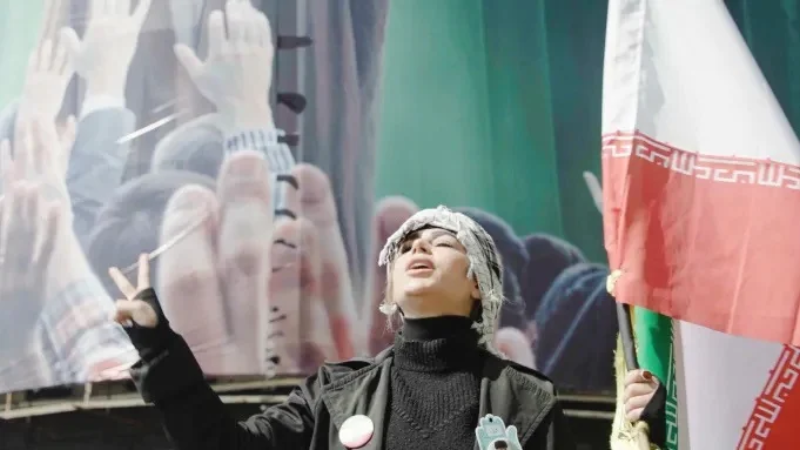
before the bombs
Western coverage of the war flowed through Washington and Jerusalem: targets, timelines, oil prices. These three films turn the camera on the people who pay. Iranians have lived 47 years under a theocracy that controls belief and behavior, and their resistance has a long history. Filmed in secret Remembers the women who came out against the compulsory hijab, then the students, the workers and the rebellion of women, life, freedom. “They met each of them with force,” says the narrator. “Each left their scars.”
The United States has a stake in this story. After Mohammad Mossadegh nationalized the Anglo-Iranian Oil Company, BP’s predecessor, a 1953 coup “led by the CIA” reinstated the Shah. The 1979 revolution that ended his autocracy fell to the clergy.
In January 2026, protests returned, fueled by a failing currency, and the regime responded with massacres. According to the DW film, families had to pay a “bullet fee” to retrieve their children’s bodies and then danced during the funeral. Reza Pahlavi called people to the street, and many did not trust him. “I don’t believe in Pahlavi, but I went to the protest,” says one woman. Some Iranians, including the narrator, welcomed the bombs when they came.
“Now very few believe that deliverance can come from heaven.”
Back to where we started
The bombs fell on February 28, two days after a round of nuclear talks in Geneva that Iran described as the “most serious”. Filmed in secret follows the war from within. Within minutes of the first strikes, the regime shut down the Internet again, but “some people were still able to upload videos to show the world what was happening to us,” the narrator says. They paid for it: “There are hundreds of trials just for people who send videos,” says Sheerin. Gaza gave the world months of footage of residents filming their own destruction. The Iran blackout has cut off much of this at the source, and the flaws in these films are part of what they show. The first strikes killed Ali Khamenei and, according to his son Mojtaba, Mojtaba’s wife, sister, son and son-in-law. Then Israel hit the oil rigs, the morning sky turned black, and Shirin came home from filming with oily rain on her face.
On March 8, Mojtaba Khamenei became the supreme leader. “It felt as if we had lost our way in a fog and walked for days,” says the narrator, “only to find ourselves back where we started before the protest. The theocracy survived; only the father’s reign ended.”
On the first night, Netanyahu told the Iranians that “help has arrived.” Trump vowed that “47 years of extortion, corruption and death will finally end.” Instead, Iran took over the Strait of Hormuz and choked the world economy, and the narrator admits that “it didn’t look like the US and Israel were winning the war.” Regime loyalists have taken over roundabouts, checkpoints have multiplied and people have been arrested for filming them. After the ceasefire, the executions were accelerated. Film Verdict: “Very few now believe that deliverance can come from heaven.”

I carry their voices
to DW Iran: Diary from a war zone Works on a smaller scale. An exiled Iranian filmmaker asked two friends to film their lives on their phones, one in Tehran and the other in Zahedan, near the Pakistani border. Their faces have been hidden, their names have been changed, their voices have been re-recorded by actors, and it took more than a month to shoot. “They’re filming from the outside,” says the director. “I carry their voices.”
Saleh, in Tehran, hears his neighbors cheering Khamenei’s death on a day when state television reports a school strike. “I was heartbroken,” she says. “I feel sorry for the killed girls. But I feel joy for Khamenei’s death. Airstrikes for Nowruz no longer surprise him: ‘It’s strange how I got used to them.’
Netanyahu’s first night address named the “Balochs” among the peoples to be resurrected. A Baluchi man in Zahedan replies nonchalantly: “The system is still there. The machine of oppression he commanded did not die with him. His war is text messages urging him to inform his neighbors, a forced confession on state television, and the hanging of three young men.”
Iran signed the deal and bombed in the middle of the negotiation.
The winner was Iran
All three films are set in Minab, where rockets hit Shajare Taibeh Primary School on the first morning of the war. Al Jazeera Take Gives the strike a full episode. It begins with a mother recalling her son’s play that morning: “I’m Iran and you’re America.” Then: “My son said Iran was the winner.”
On March 7, Trump said, “From what I’ve seen, Iran did it.” Pete Hegsett added that “the only party targeting civilians is Iran.” Two days later, Trump allowed that the Tomahawk was “very generic” that Iran had it (“I wish they had more”) and that it was “willing to live,” which an investigation would determine. In July, without reporting, he said the school’s images may have been created using artificial intelligence.
Families tell this in their own words. Preschool teacher Hosnieh Salem told Drop Site News how she pushed children under tables and carried them around barefoot; The survivors, he said, are “broken”. Yaghub Yazdanpana, who teaches Persian literature, learned that his six-year-old daughter, Fatima, was found in the teacher’s arms next to her cousin Asra. Forensic architecture set off a second wave of strikes while parents and rescuers were still digging. In September, a UN fact-finding mission called the strike a war crime.
is turned on TakeWriter Hoda Katheb cites a familiar Gaza pattern: hit what people love most, then reject it. He understands the old script in promising to liberate Iranian women. “It’s so 2002,” he says.

The lesson of the bomb
Iran has stood on the nuclear line before. In doomsday carwhich I reviewed for CounterPunch, Daniel Ellsberg recounts August 1980, when a Soviet buildup on the Iranian border followed secret American nuclear warnings in what Carter’s press secretary called the worst nuclear crisis since Cuba.
John Mearsheimer, a realist at the University of Chicago, published a report on November 6 that reads like a sequel. The two wars, he said, “gave Iran a big incentive to get nuclear weapons,” with the logic that no one attacks a nuclear state. Saudi Arabia will follow, he says, and others after that. If conventional bombing fails to stop an Iranian bomb, he warns, “Israel will certainly think long and hard about solving this problem with a nuclear attack.”
Israel maintains an undeclared arsenal outside the Non-Proliferation Treaty. Iran signed the deal and bombed in the middle of the negotiation. In Washington, only the president can order a nuclear strike, and Congress has never authorized this war. Trump said in October that he “would not go nuclear.” No law requires the consent of another. The UN Security Council condemned Iran’s retaliation without naming the attacks on Iran.
The regime learned a lesson from this war. The people of these films drew their own and Filmed in secret He says: “If we want change, it has to come from within.”
The post Destruction of Civilization, One Schoolhouse at a Time appeared first on Modern Times Review.


