 Skip to content
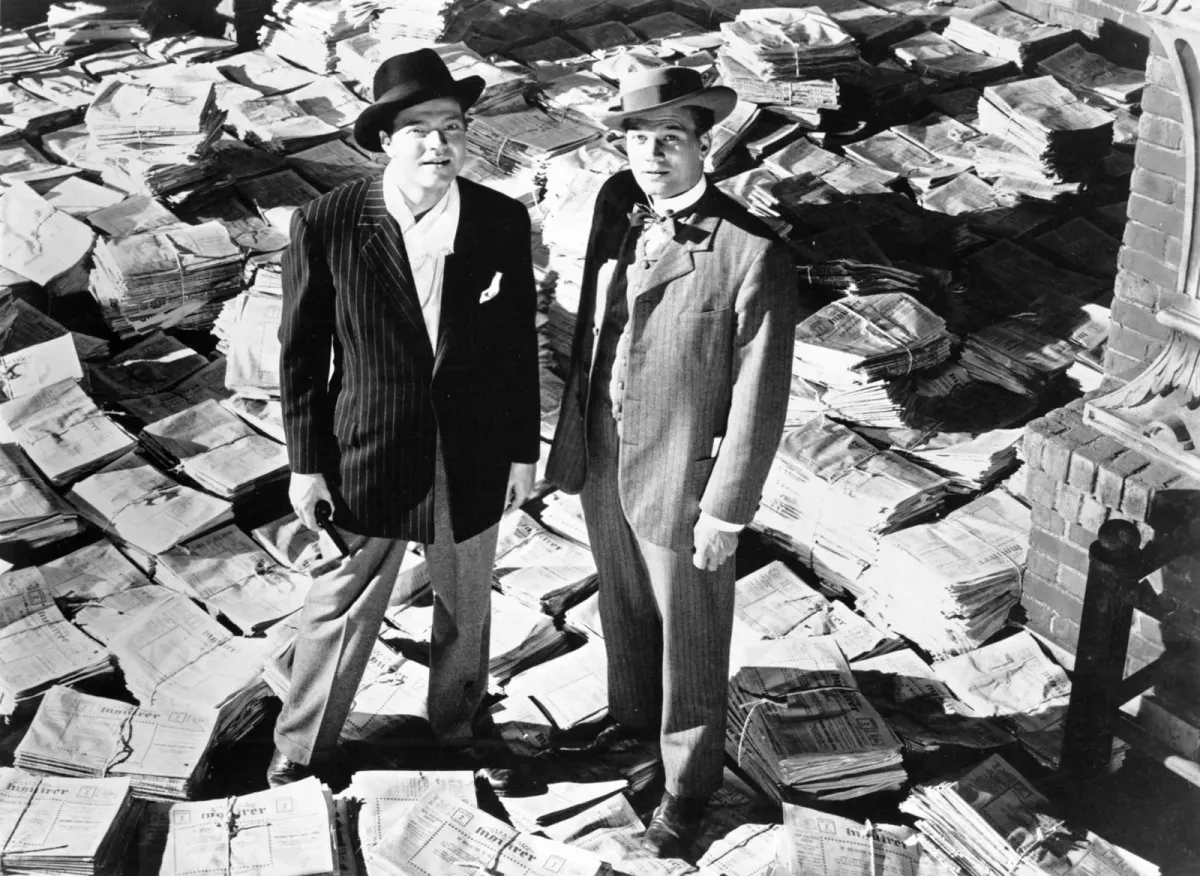
This situation probably happened to all of us. You watch a film for the first time and think: “That was meh”; “I recognise its qualities, but it’s not for me”, or just plainly “Well, that was disappointing”. And then, years later, you decide to give this film a second chance for whatever reason, and it suddenly becomes a revelation. You love the film, and wonder why it was not the case the first time. Rebecca is focusing on this particular subject for her It Grew On Me Blogathon that she is hosting this weekend on her blog Taking Up Room. The blogging event is also aimed at films we grew up disliking. On my side, I wanted to focus on the more positive side, so films I grew up liking after giving them a second, and sometimes, a third chance. I was initially supposed to write about a single film, but then I thought I’d have more fun doing a top list of films that had that effect on me.
Let’s admit it, the reason I wasn’t quite conquered by these films on a first viewing probably depends a lot on when I saw them. I was probably too young to fully appreciate and understand the subtleties of those, their qualities and intelligence. On the other hand, there are some films I know I watched for the first time at the right moment. There’s this Quebec film called Tu Dors Nicole (Stéphane Lafleur, 2014), which I watched for the first time a few years ago and really liked. However, I know that if I had seen it on its release in 2014, when I was 19, I probably would have found it boring and pointless. Sometimes, watching a film in the right circumstances can also change your vision. For example, in some of the examples on my list, the big screen worked its magic. Honestly, none of them are films that I hated on my first viewing. Otherwise, I’m not sure I would have been willing to see them again. Unless I had to, for a school project, for example (but I finished university six years ago, so that won’t happen).
I don’t really have disclaimers like “these are my personal choices” to do this time, because it’s not really that kind of a list. It’s just… films that I didn’t like much but like now. So, it’s all about positivity, and the type of list will probably be very different from one person to another. All I’m hoping is that, if there’s a film on this list you have seen and didn’t really like, maybe this article will make you want to give it another chance. PS: I know my reasons why I didn’t care much for these films initially are sometimes a bit stupid… But it is what it is!
Furthermore, it’s hard to “rank” this, so they’ll be in chronological order of release. Please don’t hesitate to click on the orange links to read my full reviews for some of these films. I’ve decided to stick to 15, but more could have been included. Maybe for a part 2!
Lastly, I won’t give a full summary for each film. To put you in context, I’ve provided the IMDb log line for each one of these, like they do in one of my favourite film podcasts, What Went Wrong?.
Without further ado, here we go!
***
42nd Street (Lloyd Bacon, 1933)
IMDb log line: When the leading lady of a Broadway musical breaks her ankle, she is replaced by a young unknown actress, who becomes the star of the show.

I remember 42nd Street was among those first “very old” films I watched when I was in my teens. Not understanding the coolness of pre-code films probably didn’t help to appreciate them fully. Anyway, I’ve always enjoyed the final musical number but thought the rest was forgettable. Then, many years later, I’m at university, and in one of the classes, the teacher shows us clips from… Dames (Ray Enright, 1934), which Busby Berkeley also choreographed. Those were mostly the choreography scenes, which are visually breathtaking (I mean, the students were applauding in class!), and it really made me want to see the whole film. So, closely after, I went to HMV (RIP), where I found one of those TCM box sets with four Busby Berkeley films. One of them, of course, was Dames, and the other ones were Footlight Parade (Lloyd Bacon, 1933), Gold Diggers of 1937 (Lloyd Bacon, 1936) and 42nd Street. My first thought when realising 42nd Street was part of the set was: “Should I really pay for a film I initially didn’t like that much?” Finally, the positive reasons for buying it had a greater impact. Not only was the box set cheap, but I desperately wanted to see Dames, and I was quite curious about Footlight Parade as well. The fact that they included Gold Diggers of 1937 instead of the much better Gold Diggers of 1933 (Mervyn LeRoy, 1933) is another story… So, I eventually ended up watching Dames, which I sincerely enjoyed. Eventually, comes the time to give another chance to 42nd Street. I mean, I bought it. I have to. Well, let me tell you, this time, I absolutely loved it. I found the whole story very exciting and well-put, loved some of the acting, especially that of Warner Baxter, Una Merkel and Bebe Daniels. I also liked the chemistry between Ruby Keeler and George Brent. They don’t play lovers. It’s just a sweet friendship. And watching a good pre-code is always a must. I was so entertained by it that I didn’t want it to end, and this doesn’t often happen. I’m not saying that I love it when a film ends (it sounds like I don’t appreciate anything), but I always love the idea of closure, a conclusion. Anyway, I now hold 42nd Street in very high regard.
Swing Time (George Stevens, 1936)
IMDb log line: Roguish gambler/dancer “Lucky” Garnett is challenged by his fiance’s father to come up with $25,000 to prove he’s worthy of her hand. But after he falls in love with a dance instructor, Lucky’ll do anything to keep from earning the bucks.

I watched Swing Time for the first time around the same time I watched 42nd Street, and it was also my introduction to Ginger Rogers and Fred Astaire’s filmography. I thought it was overall ok and had some great dancing numbers. However, I thought some of the story lines were a bit dull, such as a the fact that we never see them kissing (now, I understand that it’s just a running gag and it doesn’t have to be taken so seriously) and the fact that they made a fuss about a pant hem was a bit out of this world (not in the good way). Anyway, I was discussing this film with my friend on our way to high school. She bought the DVD and didn’t like it much either. It sort of became a running gag between us. Not so long ago, that same friend was doing some cleaning and wanted to get rid of the Swing Time DVD that she probably wouldn’t watch again anyway. She asked me if I was interested. Since I had seen the film only once, I thought, “Why not?” I love classic film, and that would be the perfect occasion to give it a second chance. To put you in context, the last time I had seen it was over 10 years ago. Anyway, I liked it much more on that second viewing. I won’t say it became a huge favourite of mine, but I was entertained and spent a good time watching it. Actually, I rated it 4 stars on Letterboxd, which means I definitely thought it was at least great!
Holiday (George Cukor, 1938)
IMDb log line: A young man in love with a girl from a rich family finds his unorthodox plan to go on holiday for the early years of his life met with skepticism by everyone except for his fiancée’s eccentric sister and long-suffering brother.
If I’m not mistaken, Holiday was the first Katharine Hepburn film I ever saw. Well, as a matter of fact, it was maybe The Philadelphia Story (George Cukor, 1940). So, if it wasn’t the first one, it was the second. Anyway, if I compare it to some of her other films, such as The Philadelphia Story, Bringing Up Baby (Howard Hawks, 1938) or The African Queen (John Huston, 1951), Holiday was not one of those films I instantly loved. I liked it ok, but didn’t love it either. I didn’t catch how great some of the characters were, because I guess I was a bit stupid. Also, as it is labelled as a comedy, I probably expected to laugh much more, but in the end, there’s lots of sadness in this film. No, Holiday isn’t necessarily a hilarious film (although there’s a lot of humour in it), but it’s certainly a very sweet film. The best thing about it is probably the chemistry between Hepburn and Grant. We also love the very comforting set-up of the playroom, Lew Eyre’s performance, the presence of Edward Everett Horton and Jean Dixon, and all the acrobatics. Anyway, I came to realise that when I saw it on the big screen at the TCM Film Festival in 2019. I watched it with other festival goers, including Marya E. Gates, the creator of #Noirvember, who seems to really love that film. It definitely made me see it in another light. It’s, as I said, a very sweet picture, and a true balm on the heart. It’s now a film I always enjoy revisiting, and I even introduced my master’s thesis on screwball comedies by referencing it.
Nigh Train to Munich (Carol Reed, 1940)
IMDB log line : After Germany invades Czechoslovakia, the German and the British intelligence services try to capture Czech scientist Dr. Axel Bomasch, inventor of a new type of armor-plating.

This is actually the film I was initially supposed to write about in depth for this blogathon. If I can give you a brief reason why it “grew on me” positively, and why I didn’t care much for it on my first viewing, it’s, first and foremost, a question of expectations. The fact that I also watched it for the first time… on my iPhone probably didn’t help either. I know, I know. So, Night Train to Munich is labelled as an unofficial sequel to my favourite film, The Lady Vanishes (Alfred Hitchcock, 1938). But it isn’t really one. The reasons why it is labelled as such rely mostly on the genre, thriller, the presence of Margaret Lockwood and because Sidney Gilliat and Frank Launder co-wrote it. Actually, the only true narrative connection between those two films is the presence of the popular duo of characters and cricket fans Charters and Caldicott (Basil Radford and Naunton Wayne). Their absurd characters were so popular in The Lady Vanishes that they appeared in three other films: Night Train to Munich, Crook’s Tour (John Baxter, 1941) and Millions Like Us (Sidney Gilliat and Frank Launder, 943). So, my expectations were not quite met when I first saw the film. First of all, one of the strong points of The Lady Vanishes was the presence of Michael Redgrave and his character Gilbert, who happens to be my favourite film character. Rex Harrison plays a similar guy, but he’s no Michael Redgrave… In fact, Harrison often annoys me. I do like him, however, in some films like Blithe Spirit (David Lean, 1945) or The Ghost and Mrs. Muir (Joseph L. Mankiewicz, 1947). Spoiler alert: I even learned to appreciate him in Night Train to Munich. However, Margaret is great and proves her versatility as her character, Anna Bomasch, is quite different from Iris in The Lady Vanishes. Plus, spoiler alert (because that’s a plot twist revealed quite early in the film): Paul Henreid plays a brilliant villain. And I quite enjoy seeing him in a pre-Casablanca (Michael Curtiz, 1942) role. Another thing that disappointed me is that, despite its title, most of the film doesn’t happen much on a train. I love films where most of the action happens on a train, which is the case for The Lady. I expected the same from Night Train. However, the train part is one-third of the film. And maybe even less. However, what made me appreciate this film more is to think of it as something independent from Hitchcock’s film. More viewings made me appreciate its subtleties and what an effective thriller it was. Moreover, the presence of Charters and Caldicott is always a win as they are always unintentionally hilarious. I still don’t think it’s as good as The Lady Vanishes, but it’s still a solid film worthy of your time. PS: If I had to recommend another British thriller with most of the action taking place on a train, that would be Sleeping Car to Trieste (John Paddy Carstairs, 1948).
Citizen Kane (Orson Welles, 1941)
IMDb log line: Following the death of publishing tycoon Charles Foster Kane, reporters scramble to uncover the meaning of his final utterance: ‘Rosebud.’
Ah, yes, THE film. Citizen Kane is often considered to be the best film of all time, one that every cinephile should see once in their life to understand the true meaning of cinema, and blah-blah-blah. However, despite its respectable canon status, let’s admit it, I’ve rarely seen Citizen Kane at the top of someone’s favourite films. I know I’m not the only one in this situation: not liking the film that much on my first viewing and seeing it as something you must cross off a list. The fact that it is labelled as one of the best films of all time is probably part of the problem, as it exaggerates expectations. The reasons why it is a unique film are subtle and not necessarily “in your face”. You also have to remember that, impressively, Orson Welles was only 25 years old when he produced it. That is, to say the least, quite a tour de force. Anyway, my journey with Citizen Kane is an interesting one. I was a teenager, around 15 or 16, when I saw it for the first time, and was not conquered by it. I was definitely not at an age where I was attracted to long, politically driven films and had difficulty “getting” Orson Welles’s acting (I learned to appreciate it more with time). I mostly thought: “So, THAT’S supposed to be the best film of all time??” Then, fast forward a few years later in 2015. I’m doing a one-year screenwriting certificate at the University of Quebec in Montreal. In one of my courses, we’re due to watch Welles’s so-called masterpiece. This time, I was a bit more excited, as I had become a fan of Welles’s frequent collaborator Joseph Cotten, who plays a major role in the film. So, even if I don’t like the film much, at least I can focus on him. So, we watched it, I appreciated Cotten’s presence and was, overall, a bit more appreciative of the film. However, we were not quite there. Fast forward again, to 2018. I’m in the final year of my bachelor’s degree in film studies at Concordia University. I have the pleasure of attending a seminar on Hitchcock and Orson Welles. Citizen Kane was not on the curriculum, probably because the teacher assumed most of us had seen it at that point, and there were many other Orson Welles films to explore. Nevertheless, we did come across the film in one of the classes. I remember we watched the video clip of Madonna’s “Oh Father”, which was directed by David Fincher and stylistically inspired by Citizen Kane. Being a fan of the Queen of Pop, this obviously caught my attention. Then, the teacher decided to show us some clips from Welles’s film so we could better understand the comparison. As we were watching those clips, all of a sudden, I spontaneously thought: “Wait! But this is actually good! I don’t want to watch clips only! I want to watch the whole thing!” and felt very invested in my viewing. The teacher was commenting as we were watching, and, respectfully, at that moment, I wanted him to shut up and let us watch and focus. As we were not going to watch the whole thing, I instantly knew which film I was going to watch that evening at home. So, I rightfully decided to give Citizen Kane a third chance and, this time, as expected from my experience in class, I really liked it. I’m not really sure what happened! Just the passing time, I guess…
Jane Eyre (Robert Stevenson, 1943)
IMDB log line: After a harsh childhood, orphan Jane Eyre is hired by Edward Rochester, the brooding lord of a mysterious manor house, to care for his young daughter.

My first connection with Jane Eyre was initially when I read the book by Charlotte Brontë, which I loved. Naturally, I was excited to watch the 1943 film adaptation by Robert Stevenson (who also directed Mary Poppins, by the way). Not only because it was a classic, but also because it starred Joan Fontaine, whom I loved and still do. My first impression was a bit of a “meh”. I thought it was ok, but I didn’t think it translated the excitement I had found in the book. And, once again, I was not particularly conquered by Orson Welles’s acting, which was, for me, a bit too much larger than life. One thing, however, that really struck me is how much young Elizabeth Taylor looked like me (which was almost disturbing, especially since she, spoiler: DIES at some point). So, I left it there. Some years later, decided to give it another chance because why not? This time, its qualities definitely surpassed its flaws. First of all, Joan Fontaine was perfectly cast in the role. She was simply great at playing that type of role and choosing the right range, the perfect tone in her emotions, for such a performance. Second, I had completely forgotten how great Bernard Herrmann’s score for this film was. I especially love the crescendo in the music when Edward Rochester (Orson Welles) is introduced on his horse. Not only is the orchestral music at its culminating point, but it is also brilliantly shot. Naturally, Jane Eyre is a film that would make a great double feature with Rebecca (Alfred Hitchcock, 1940), a favourite of mine since day one.
Gilda (Charles Vidor, 1946)
IMDb log line: A small-time gambler hired to work in a Buenos Aires casino discovers his employer’s new wife is his former lover.

I previously said that some of these films grew on me thanks to the big screen experience. However, it was not the case for Gilda. As a matter of fact, the first time I saw it WAS precisely on the big screen. If I’m not wrong, the film was in English only without subtitles. Although I’ve always preferred watching films in their original language, my English hearing comprehension at the time definitely wasn’t as good as it is now. In other words, subtitles help. So, the fact that I couldn’t understand everything probably didn’t contribute to my liking of the film. I appreciated some of its elements, such as the costumes, Rita Hayworth’s gorgeous hair and the “Put the Blame on Mame” scene. Iconic. But, on the other hand, I was quite drawn back by the toxicity of Gilda and Johnny’s relationship, I didn’t particularly enjoy the acting (I learned to appreciate it with time), thought the whole thing was way too serious, and I wasn’t particularly excited by the whole casino set-up. I had yet to become a fan of film noir! But then, I had the occasion to watch it again, and again. Eventually, it became one of those films I like more and more on each viewing. Now I can confidently say it’s a favourite of mine. I even bought the Criterion DVD and rated it a **** 1/2 on Letterboxd after my latest viewing. I especially like the complexity of Gilda (the character) and how she almost unfolds as a feminist icon. I love how she wants to decide things for herself in an era where it was not well seen. Furthermore, I came to realise how exquisite some of the dialogues were, which makes the whole viewing truly exciting.
A Streetcar Named Desire (Elia Kazan, 1951)
IMDb log line: Middle-aged, emotionally disturbed Blanche DuBois moves in with her younger sister in New Orleans and is tormented by her brutish brother-in-law while her reality crumbles around her.

So, when I was in high school, I had a huge crush on young and sexy Marlon Brando. Therefore, when I saw pictures of him in A Streetcar Named Desire, I knew I had to see that film. Plus, it starred Vivien Leigh, who had impressed me with her performance in Gone With the Wind (Victor Fleming, 1939), and it was overall labelled as a true must-see classic. What could go wrong? Well, this film is traumatising. I mean, that ending… And Brando’s character might be the sexy bad boy, but he’s not exactly someone you’d like to have around. Once again, I was definitely too young to appreciate it. Nevertheless, I read the play and, years later, during a university seminar, I learned to truly appreciate the work of Tennessee Williams through films written by him and/or adapted from his plays. Anyway, this made me want to see A Streetcar Named Desire again. This time, with more maturity, I understood it better and definitely saw it in a new light. A theatre in Montreal will actually present it, and I’m very tempted to go. The only Tennessee Williams play I saw on stage was The Glass Menagerie, and I absolutely loved the experience.
The Browning Version (Anthony Asquith, 1951)
IMDb log line: A classics teacher’s interest in his pupils wanes as he looks towards his final days in employment.
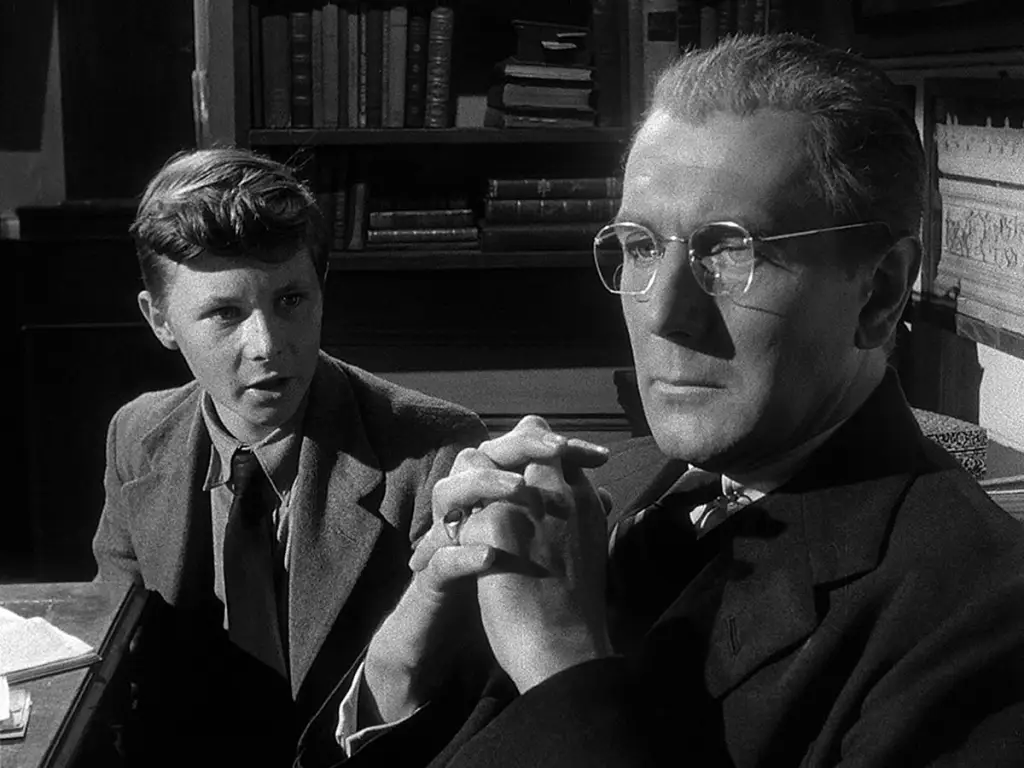
The Browning Version is one of those films that initially feels too serious and even a bit boring, especially due to the main character, Andrew Crocker-Harris (Michael Redgrave) and his pretty miserable life. I mean, even Criterion didn’t put much effort into the design of their DVD cover, which is a bit dull and brown and yeah… So, on my first viewing, I thought “meh!”. That was interesting, and I could see its potential, but I definitely had to give it another chance. A second and third viewing make you realise what a human film it is. It is about the complexity of human relationships, the good and the bad ones, and how each individual navigates between them. Michael Redgrave is, in fact, wonderful in the film and showcases an impressive graduation in the vulnerability of his character. It’s one of those films where a character’s evolution is truly interesting to witness. The film also has great acting by the young Brian Smith, who plays Taplow, one of Crooker-Harris’s students, and the only person who truly manages to see through him and access his emotions. Anyway, I definitely recommend it.
How to Marry a Millionaire (Jean Negulesco, 1953)
IMDB log line: Three women set out to find eligible millionaires to marry, but find true love in the process.
How to Marry a Millionaire is, overall, a very fun film. I love the idea that there was great chemistry on set between the three actresses (Marilyn Monroe, Lauren Bacall and Betty Grable). However, on my first viewing, it didn’t have quite the same impact on me as other Marilyn Monroe films of the 50s such as Some Like It Hot (Billy Wilder, 1959) or Gentlemen Prefer Blondes (Howard Hawks, 1953). The film is mostly focused on Lauren Bacall’s character, who, although a very bright woman, I have difficulty appreciating as much as Marilyn Monroe or Betty Grable’s characters. Sure, she’s the leader, the rational one, but her moments actually aren’t the most fun, in my opinion. Plus, in all respects to Bacall, I always found her acting kind of cold. Nevertheless, there are things I really appreciated about this film, and each viewing reveals more qualities. I especially like the chemistry between David Wayne and Marilyn Monroe. Moreover, the scene where Betty Grable realises in what kind of mountain shack she’s going to spend the weekend is quite hilarious. These are just a few examples. It’s, overall, a pretty light film that becomes easy to appreciate with time.
The Country Girl (George Seaton, 1954)
IMDb log line: A director hires an alcoholic has-been and strikes up a stormy relationship with the actor’s wife, who he believes is the cause of all the man’s problems.

Yes, this is a depressing film, which definitely influences the way you appreciate it. I think you have to be in a certain mood to truly appreciate its seriousness, which was probably not the case on my first viewing. However, I gave it another chance and eventually learned to truly liking it. It’s a tour de force in terms of acting, from the three main actors: Grace Kelly, Bing Crosby and William Holden. And yes, I do think Kelly’s Oscar was deserved. Just like The Browning Version, it’s very much about human relationships and what we know about them and don’t.
The Swan (Charles Vidor, 1956)
IMDb log line: When a crown prince visits, the princess’s mother tries to push the prince into marrying her daughter by presenting a “rival” at the ball – her children’s handsome tutor.
Yes, another Grace Kelly film! And another Charles Vidor film! As a matter of fact, when I first saw it, I did like it fine, but it was still “one of those films”, you know. I certainly didn’t think it was Kelly’s best film. If you compare it to masterpieces like High Noon (Fred Zinnemann, 1952) or Rear Window (Alfred Hitchcock, 1954), it is normal not to be too impressed by it. While it will never gain the same status as those films, giving it another chance only made it grow on me positively. First of all, the supporting cast is one of the best I’ve seen in classic films. As much as I love Kelly and Louis Jourdan, it goes without saying that some of the other actors, especially Estelle Winwood, steal the show. I mean, she’s hilarious. I also love the scenes between Kelly and Brian Aherne. As for Alec Guinness, his character, Prince Albert, is certainly not as dull as they want us to believe. He’s actually quite hilarious and overall a good sport. Spoiler alert: The ending is definitely bittersweet. However, (and this might be controversial), I don’t think it’s necessarily a bad thing that she sets up to marry him as intended, instead of her fencing teacher, played by Louis Jourdan. Actually, towards the end of the film, the latter kind of annoys me, and their dynamic makes us think that, in the end, this might not have worked. Prince Albert shows a lot of understanding towards the end of the film, and although they sadly might not set up a marriage of love, you have the hope they’ll at least learn to appreciate and respect each other. Ok, that sounds depressing, but believe me, it’s a film with lots of delightful little moments.
Vertigo (Alfred Hitchcock, 1958)
IMDb log line: A former San Francisco police detective juggles wrestling with his personal demons and becoming obsessed with the hauntingly beautiful woman he has been hired to trail, who may be deeply disturbed.

Vertigo is, without a doubt, considered a masterpiece. It’s labelled as one of Hitchcock’s very best films and was at the top of Sight & Sound‘s top 100. However, although Hitchcock’s films generally tend to be quite entertaining and exciting, Vertigo, in my opinion, doesn’t match these criteria. I’m not saying that it’s not entertaining, but it’s not in the way films like North by Northwest (1959) or The Birds (1963) are. It’s more of a slow burn and definitely a challenging viewing. If I had to recommend a film to someone who hasn’t seen any of Hitchcock’s work, I would not start with Vertigo. My first impression of it was mostly that it was very serious and lacked that touch of humour found in many Hitchcock films. Plus, none of the characters, except for Midge, were particularly sympathetic, making it hard to connect with them. Madeleine is a femme fatale, but they make all a fuss over a… grey tailor… BUT, I didn’t necessarily dislike it. I thought it probably deserved a second chance. I like it a bit more on my second viewing. Of course, I could instantly recognise its admirable qualities. Robert Burks’s gorgeous cinematography has the strongest impact in a Hitchcock film. The opening credits by Saul Bass, along with Bernard Herrmann‘s score, brilliantly immerse you in a worrying atmosphere. Plus, it uses on-location shooting to its full potential. However, what made me appreciate the film more and see it from a more favourable angle is when I chose to write about it for a film class in CEGEP. We either had to analyse Citizen Kane or Vertigo. So, I found myself watching it again, taking a bunch of notes and realising there was so much to unfold, analyse and say about it. The fact that it made writing that school essay exciting certainly made it gain points in my heart. So, while it is certainly not Hitchcock’s most accessible film, it is, without the shadow of a doubt (see what I did here?), one of its most interesting ones if you take the time to truly understand it. Furthermore, during my trip to San Francisco in 2015, I visited as many of the Vertigo locations as I could.
Butch Cassidy and the Sundance Kid (George Roy Hill, 1969)
IMDb log line: In 1890s Wyoming, Butch Cassidy and The Sundance Kid lead a band of outlaws. When a train robbery goes wrong, they find themselves on the run with a posse hard on their heels..

A few years after making this film, Paul Newman and Robert Redford reunited with director George Roy Hill to make The Sting (1973). Now, this is a film I really enjoyed on my first viewing. I still haven’t seen it a second time, but I hope to do so in the near future. Anyway, about Butch Cassidy, I did like it, but something about it didn’t work perfectly for me. I’m not sure what. It might be the pacing, the way the story is rythmed, the fact that Katharine Ross’s character completely disappears at some point. I’ve always loved the music tho. Then, in 2019, I’m at the aforementioned TCM Film Festival and decide to give it another chance because the great late Burt Bacharach, who composed the score, will be here to introduce the film. So, that’s quite exciting because, as I said, the music is an element from this film that has worked for me since day one. Then, we watch the film on the big screen at the historical TCL Chinese Theatre. My conclusion is that this is how it is meant to be seen. It changed my perspective completely. You can see better the impressive camera work, really feel those stylistic slow-motion moments. After all, it’s a western, and this is maybe the genre that benefits the most from a big screen for a truly satisfying experience. Moreover, I realised how much it reminded me of another one of my favourite westerns, The Wild Bunch (Sam Peckinpah, 1969). Not only because it was released the same year, but also in the way it was filmed. The ending is also very similar. Plus, from an historical perspective, the real-life Butch Cassidy led a gang of outlaws called The Wild Bunch. So, there is definitely more than one comparison to make between those two great Westerns.
Ever After (Andy Tennant, 1998)
IMDB log line: The Brothers Grimm arrive at the home of a wealthy Grande Dame who speaks of the many legends surrounding the fable of the cinder girl before telling the “true” story of her ancestor.
Ever After is one of those many loose adaptations of Cinderella, except she’s called Danielle, and there’s also Leonardo Da Vinci, because why not? I was still a kid when I saw that film for the first time, which was shown to us by our sitter. However, I was at that age where liking princess stuff felt like it was for little girls and not something cool enough. I remember enjoying it. However, I wasn’t particularly touched by its sensibility. Then, I actually re-watched it many years later for a blogathon and, as I had matured, learned to love it. It’s definitely one of the best Cinderella adaptations, along with The Slipper and the Rose (Bryan Forbes, 1976). Drew Barrymore’s Danielle is a true badass and not just someone who sits on her laurels. She’s a lot of fun and a strong character. It’s also a more realistic development than the Disney version.
Caramel (Nadine Labaki, 2007)
IMDB log line: A romantic comedy centered on the daily lives of five Lebanese women living in Beirut.

And we’ve finally reached the last film! One that is much more recent than the previously discussed films, but still almost 20 years old (ouch!). So, my mother was the first one who talked to me about this film, which she had really liked. So, my expectations were high when I first saw it. I then didn’t think it was as extraordinary as my mother thought, and my appreciation was lower than expected. Once again, I was still probably too young to fully understand it. Then, during my master’s degree in Cinema Studies at Stockholm University, we had to make an oral presentation on one of the films selected by our teacher. One of them was Caramel. I decided to choose it because I had seen it and thought it would be a good occasion to see how my tastes had evolved. Well, they did and for the best. It’s a beautiful film about women’s friendship, a true ode to sorority. It’s touching, funny and warm. You can see it was directed by a woman who could put her own perspective in the film. Moreover, Nadine Labaki didn’t only direct the film, but she also starred in it. If I could compare it to something else, it kind of makes me think of Mystic Pizza (Donald Petrie, 1988). There’s a strong friendship between the women characters, but their lives are also shown separately, like tableaux, and you learn to appreciate each one of them for different reasons.
***
Well, as I said, there could be a part 2 to this list, and we’ll stop there for now. I’m curious to know if some of the discussed films had the same impact on you. Now, I’m also thinking, “There are many other films that could fit that category if I gave them a second chance.” I’m looking at you, Little Foxes DVD… Anyway, it’s always great when a film unexpectedly becomes a favourite!
And more of these are being discussed by the other blogathons participants! Make sure to read their entries HERE! A huge thanks to Rebecca for hosting!
See you!


